Concrete Garage Foundations in Atlanta
No Job Too Big or Too Small
Attached and Detached Garages
Concrete Garage Foundations
Done Right
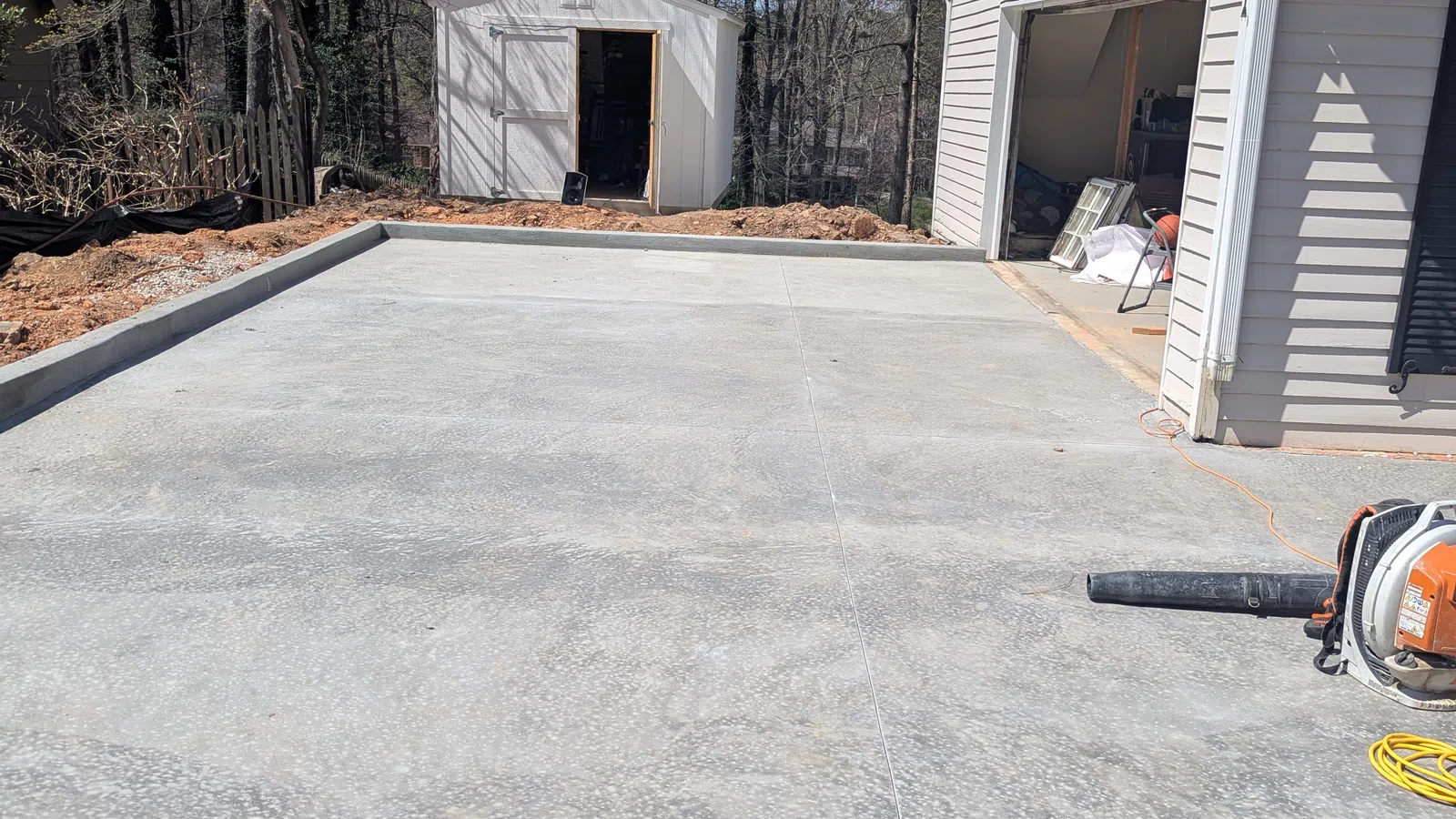
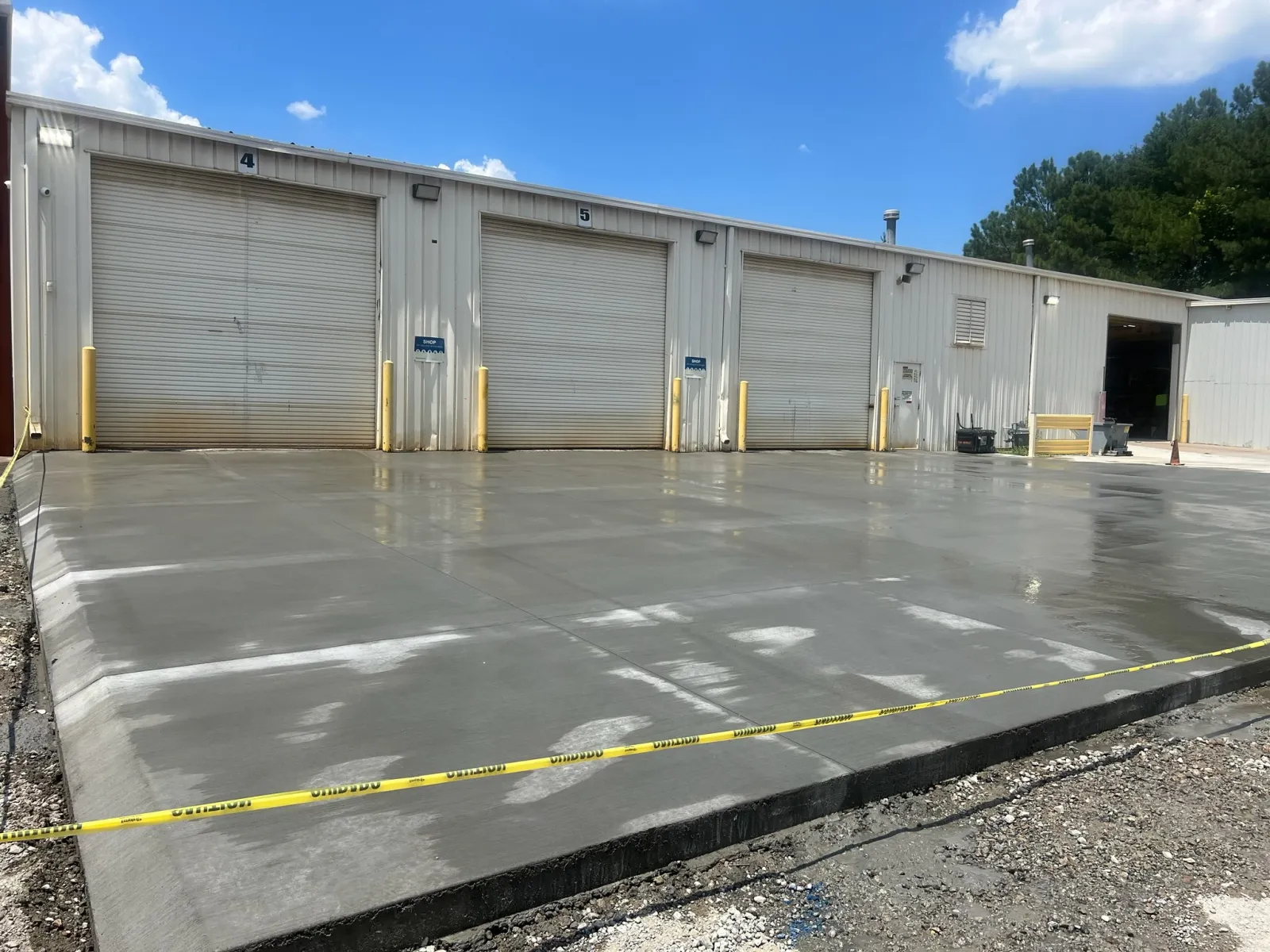
A garage slab needs to hold up to vehicle weight, heavy equipment, and decades of use. Done right, a concrete garage foundation is virtually maintenance-free. Done poorly, it cracks, heaves, and becomes a liability. At Sudlow Concrete, we install concrete garage foundations throughout Atlanta built specifically for the demands of vehicle storage and workspace use.
We work with homeowners building new detached garages, adding attached garages to existing homes, and contractors who need a reliable subcontractor for the concrete scope. Whatever your project looks like, we bring the same attention to prep, reinforcement, and finishing that makes a garage slab last.
Garage Foundation Types
We Install
Detached Garage Foundations
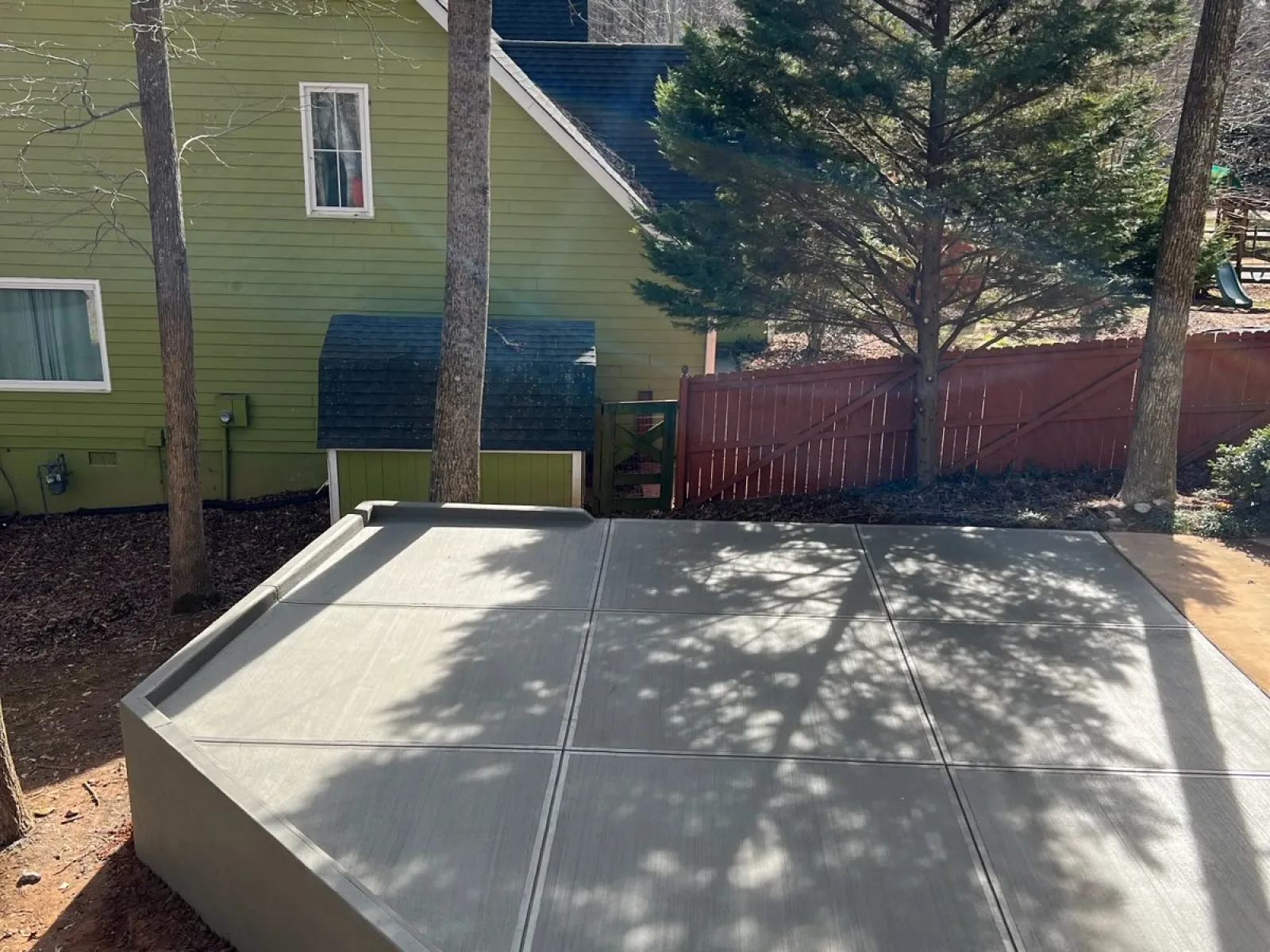
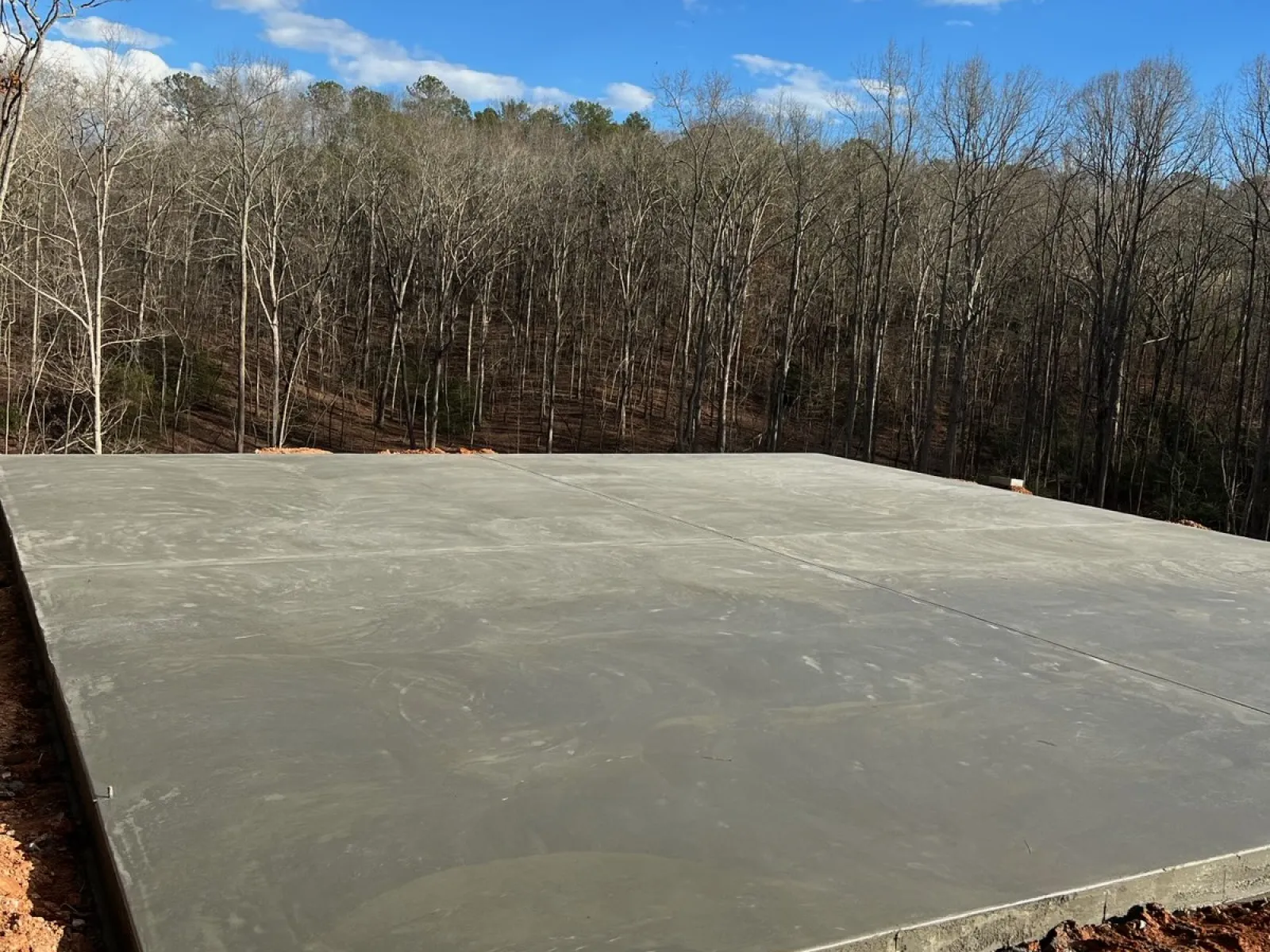
A detached garage requires its own foundation—independent of the home's structure. We install concrete slab foundations for detached garages of all sizes, from single-bay storage garages to multi-car workshops. The slab serves as both the structural footing and the garage floor, giving you a clean, durable surface from day one.
Common detached garage slab projects:
- 1-car, 2-car, and 3-car detached garages
- Workshop and hobby garage builds
- Garage conversions requiring a permanent slab
- Pole barn and carport foundations
Attached Garage Foundations
What Makes a Garage Slab
Different from a Standard Slab?
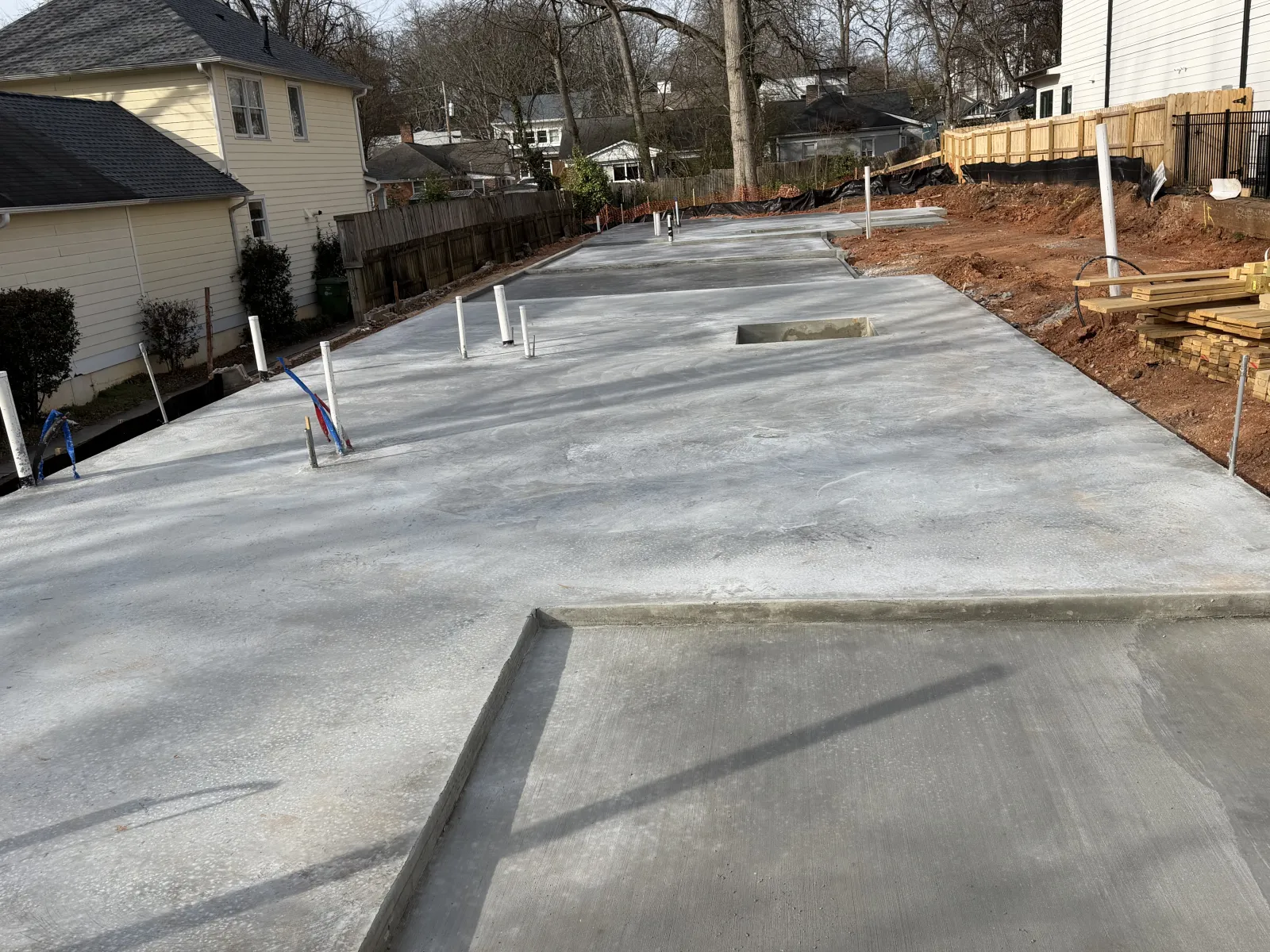
A garage foundation isn't just any concrete slab. Vehicle weight, fluid exposure, and the need for proper drainage all affect how a garage slab should be designed and poured. Key considerations include:
Thickness and Reinforcement: Most residential garage slabs are poured at 4-6 inches thick. For heavier use—multiple vehicles, equipment, or trucks—we recommend 6 inches with proper rebar reinforcement throughout. Thickened edge beams are standard along the perimeter.
Slope and Drainage: A garage slab should have a slight pitch toward the door or a floor drain to allow water and fluids to exit cleanly. Flat or improperly pitched slabs pool water, accelerate deterioration, and create a chronic moisture problem. We build proper pitch into every garage pour.
Control Joints: Concrete shrinks as it cures, and without control joints, it will crack wherever it wants. We cut control joints at appropriate intervals to direct any cracking along clean, predictable lines—maintaining both the structural integrity and the appearance of the slab.
Vapor Barrier: A polyethylene vapor barrier beneath the slab is standard practice for garage construction. It prevents ground moisture from migrating up through the concrete, which protects vehicles, stored items, and the slab itself from moisture-related damage.
Our Garage Foundation Installation Process
1. Site Preparation
We clear, excavate, and grade the site, ensuring proper slope for drainage and a compacted, stable base for the pour.
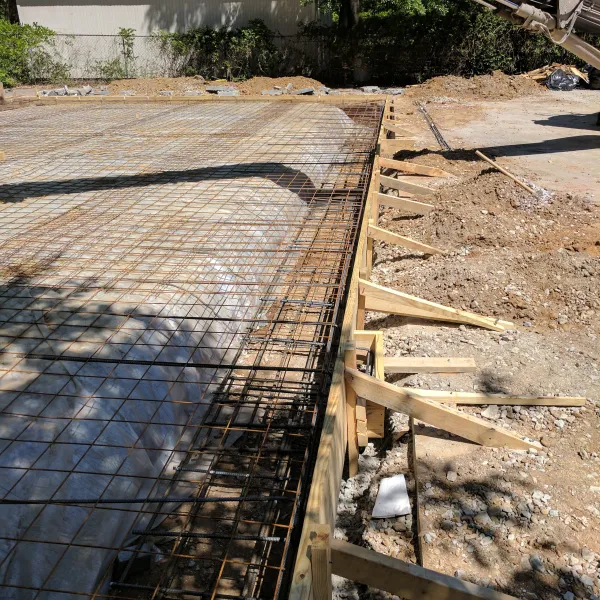
2. Gravel Base and Vapor Barrier
A compacted gravel base is installed for drainage, followed by a polyethylene vapor barrier to manage ground moisture.
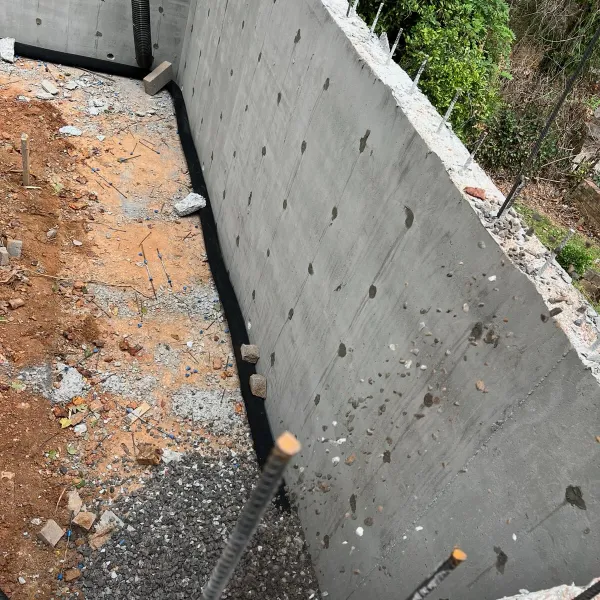
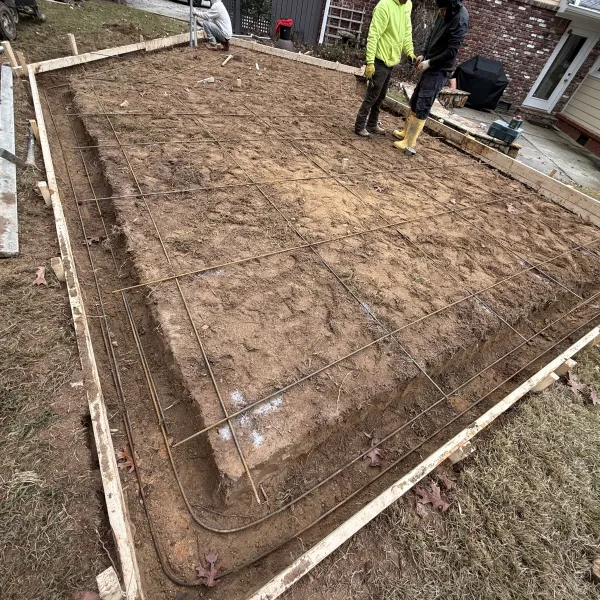
3. Forms and Reinforcement
Forms are set square and level to your garage's exact dimensions. Rebar is placed throughout, with thickened edge beams formed along the perimeter.
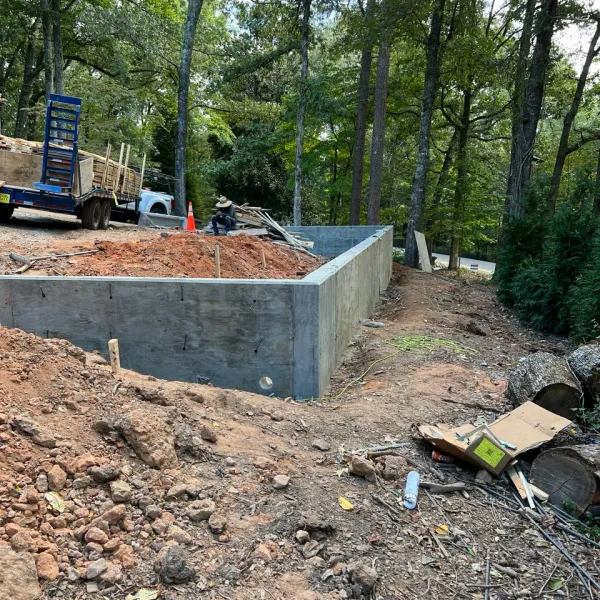
4. Pour and Finish
Concrete is poured, spread, and finished to a smooth surface with the correct pitch built in. We work efficiently to maintain a uniform pour across the full slab.
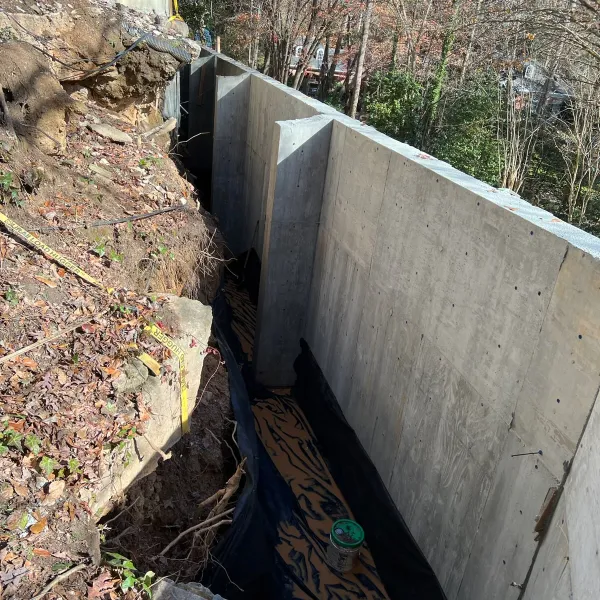
5. Control Joint Cutting and Curing
Control joints are cut at appropriate intervals within 24 hours of the pour. The slab is then allowed to cure fully before vehicle or heavy load use begins.
Why Atlanta Homeowners Choose Sudlow Concrete for Garage Foundations
- Licensed and insured concrete contractor serving metro Atlanta
- Experience with single-bay to multi-bay garage slab projects
- Proper pitch, reinforcement, and control joint placement on every pour
- Precise layout and squaring for accurate garage construction
- Reliable scheduling to keep your build on track
- Free estimates with clear, itemized pricing
Serving Atlanta and the Surrounding Communities
- Atlanta
- Marietta
- Decatur
- Sandy Springs
- Smyrna
- Roswell
- Kennesaw
- Woodstock
- Alpharetta
- And surrounding areas throughout metro Atlanta
Frequently Asked Questions
Q How thick should a concrete garage slab be?
A standard residential garage slab is 4 inches thick for single-vehicle storage. For two or more vehicles, heavier vehicles like trucks or SUVs, or any workspace with equipment, we recommend 6 inches with full rebar reinforcement. Thickened edges of 8-12 inches are standard on the perimeter.
Q How long before I can park on a new garage slab?
We recommend waiting at least 7 days before parking a standard passenger vehicle on a new slab, and 28 days before subjecting it to heavy loads. Concrete continues to gain strength throughout the curing process, and patience at this stage pays off in long-term durability.
Q Should a garage slab be sloped?
Yes. A properly installed garage slab should have a slight slope—typically 1/8 to 1/4 inch per foot—toward the garage door or a floor drain. This allows water, vehicle fluids, and cleaning runoff to exit the space rather than pooling on the floor.
Q Do I need a permit for a garage foundation in Atlanta?
Most detached garage projects in Atlanta require a building permit. Requirements vary by city and structure size, so we recommend checking with your local building department before starting. Permitted work also ensures your foundation will be inspected and meet local code—which matters when it comes time to sell the home.
Q Can you pour a garage slab on a sloped lot?
Yes. We regularly work with sloped lots, using grading, fill, and retaining forms as needed to create a level slab at the correct elevation. We'll assess your site and factor in any grading work during your estimate.
Serving
Metro Atlanta & Beyond
- Alpharetta
- Canton
- Cumming
- Dacula
- Doraville
- Duluth
- East Cobb
- Johns Creek
- Kennesaw
- Lilburn
- Marietta
- Norcross
- Peachtree
Corners - Powder
Springs - Roswell
- Smyrna
- Snellville
- Sugar Hill
- Suwanee
- Tucker
- Vinings
- Woodstock
- Buford
- Acworth
- Chamblee
- Dallas
- Dawsonville
- Decatur
- Douglasville
- Mableton
- Clarkston
- Ball Ground
- Lawrenceville
- Brookhaven
- Austell
- Scottdale
- Sandy Springs
- Stone Mountain
- Lithonia
- Gainesville
- Grayson
- Loganville
- Avondale Estates
- Ellenwood
- Lake Lanier
- Winder
- Lithia Springs
- Conyers
- Rockdale County
- Barrow County
- Hall County
- Forsyth County
- North Fulton County
- Cherokee County
- Cobb County
- Dekalb County
- Gwinnett County
- Henry County
- Douglas County