What Concrete Surface Profile (CSP) Means
and Why It Matters
If you're researching a new epoxy garage floor, a polyaspartic pool deck, or a decorative overlay for your Atlanta patio, you may hear the term CSP.
CSP stands for Concrete Surface Profile. While it sounds like technical jargon, it is actually the single most important factor in whether your new floor coating lasts 15 years or peels off in six months.
What Is Concrete Surface Profile (CSP)?
CSP is a standardized measurement developed by the International Concrete Repair Institute (ICRI). It defines the "roughness" or texture of a concrete surface on a scale from 1 to 10.
Think of it like sandpaper:
- CSP 1-2: Very smooth (feels like a sidewalk or smooth stone).
- CSP 3-5: Medium texture (feels like 60-grit sandpaper or a heavy orange peel).
- CSP 6-10: Very aggressive (deep ridges, typically for heavy industrial use).
The "Mechanical Anchor": Why Rougher is (Usually) Better
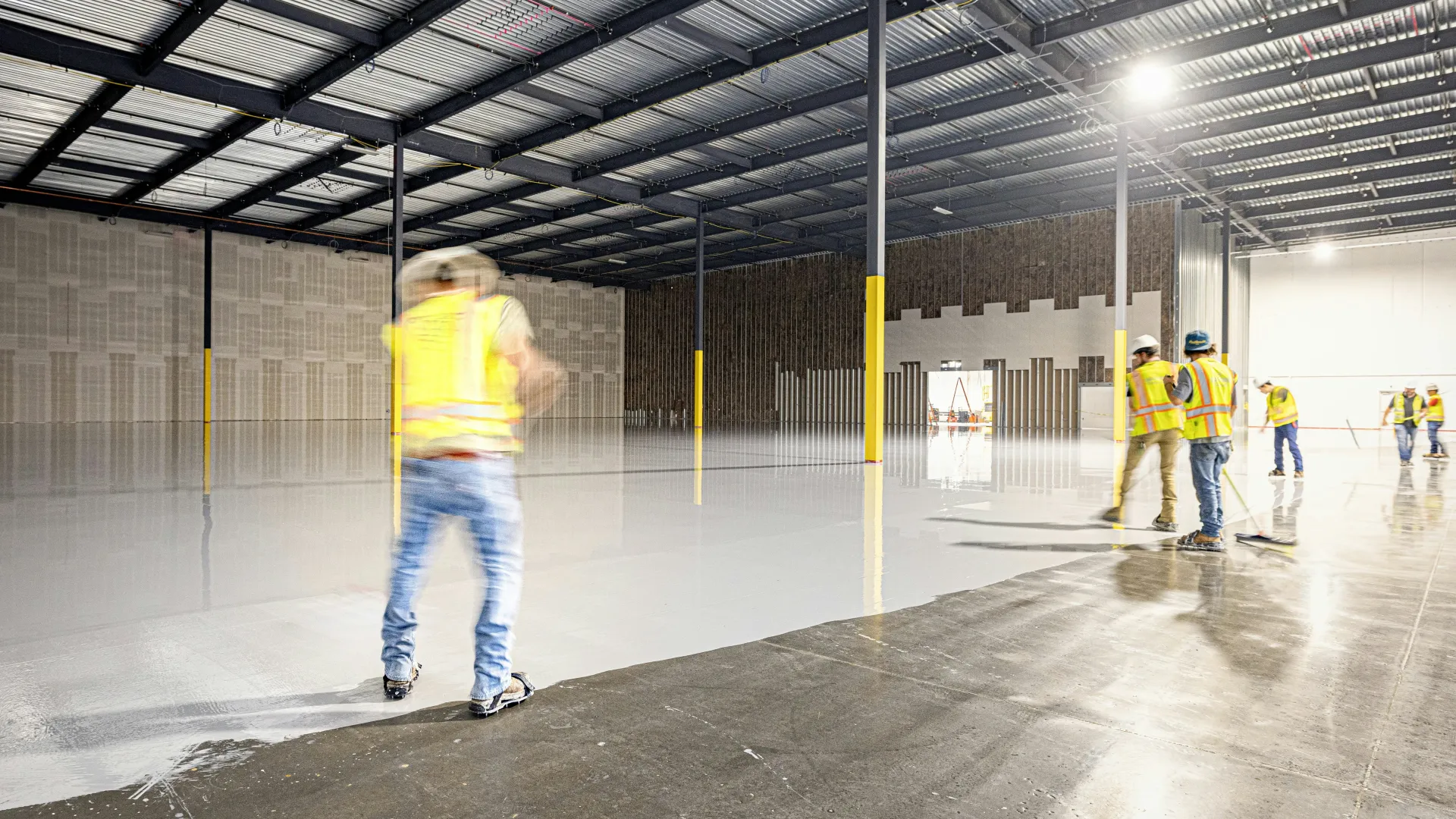
Coatings like epoxy or polyaspartic don't just "sit" on top of concrete like a rug. They need to mechanically bond to the slab.
If concrete is too smooth (a low CSP), the coating has nothing to grab onto. It's like trying to tape two pieces of glass together; eventually, the bond will fail. By creating the correct CSP, we open up the "pores" of the concrete so the liquid coating can flow inside and "lock" into place as it hardens.
Why "Acid Etching" Fails in Atlanta
Many "DIY" kits suggest using a mild acid wash to prep the floor. At Sudlow Concrete, we don't recommend this for professional-grade systems. Acid etching often fails to create a uniform CSP.
- It introduces water into the slab, which is a disaster for Atlanta's high-humidity environments.
- It doesn't remove surface contaminants like old oil or tire marks nearly as well as mechanical grinding.
Common CSP Requirements
Every product has a specific "sweet spot" for adhesion:
- Epoxy & Polyaspartic Garage Floors: CSP 2-3 (Achieved by diamond grinding).
- Concrete Overlays: CSP 3-5 (Requires a more aggressive "bite").
- Waterproof Membranes: CSP 4-6 (To handle heavy moisture pressure).
The Atlanta Moisture Factor
In the South, we deal with Moisture Vapor Transmission. Because our soil is often damp, moisture pushes up through the concrete. If the CSP is incorrect, that moisture pressure will literally "push" the coating off the slab, creating those ugly bubbles you see in poor garage floor installs. A proper CSP provides enough surface area for the bond to resist that pressure.
How We Achieve the Perfect CSP
We use specialized machinery to "profile" your floor:
- Diamond Grinding: The gold standard for residential driveways and garages. It removes the "laitance" (weak top layer) and leaves a perfect CSP 2 or 3.
- Shot Blasting: Uses small steel beads to "ping" the surface, ideal for thicker overlays.
- Scarifying: For when we need to remove heavy coatings or prepare for a very thick resurfacing.
Why You Shouldn't Skip Surface Prep
Cutting corners on prep might save a few hundred dollars on the initial quote, but it will double your costs later when the floor has to be ground down and redone. Professional surface preparation ensures the coating system performs exactly as the manufacturer intended.