Pavement vs Concrete: What’s the Difference?
Many homeowners use the terms "pavement" and "concrete" interchangeably. You might tell a neighbor you're getting your "driveway paved," but that could mean two very different things depending on the material you choose.
Understanding the difference matters—especially when planning a driveway or parking surface in Atlanta, where our heat and soil conditions put massive stress on outdoor surfaces.
What Is Pavement?
"Pavement" is actually a broad, umbrella term. It refers to any durable surface layer designed to support traffic, whether from vehicles or pedestrians. Technically, a road made of cobblestones is pavement.
In the construction world, pavement can be made from:
- Asphalt (The most common "pavement" people think of)
- Concrete
- Interlocking Pavers
- Stone or Brick
So, while concrete is a type of pavement, not all pavement is concrete.
What Is Concrete?
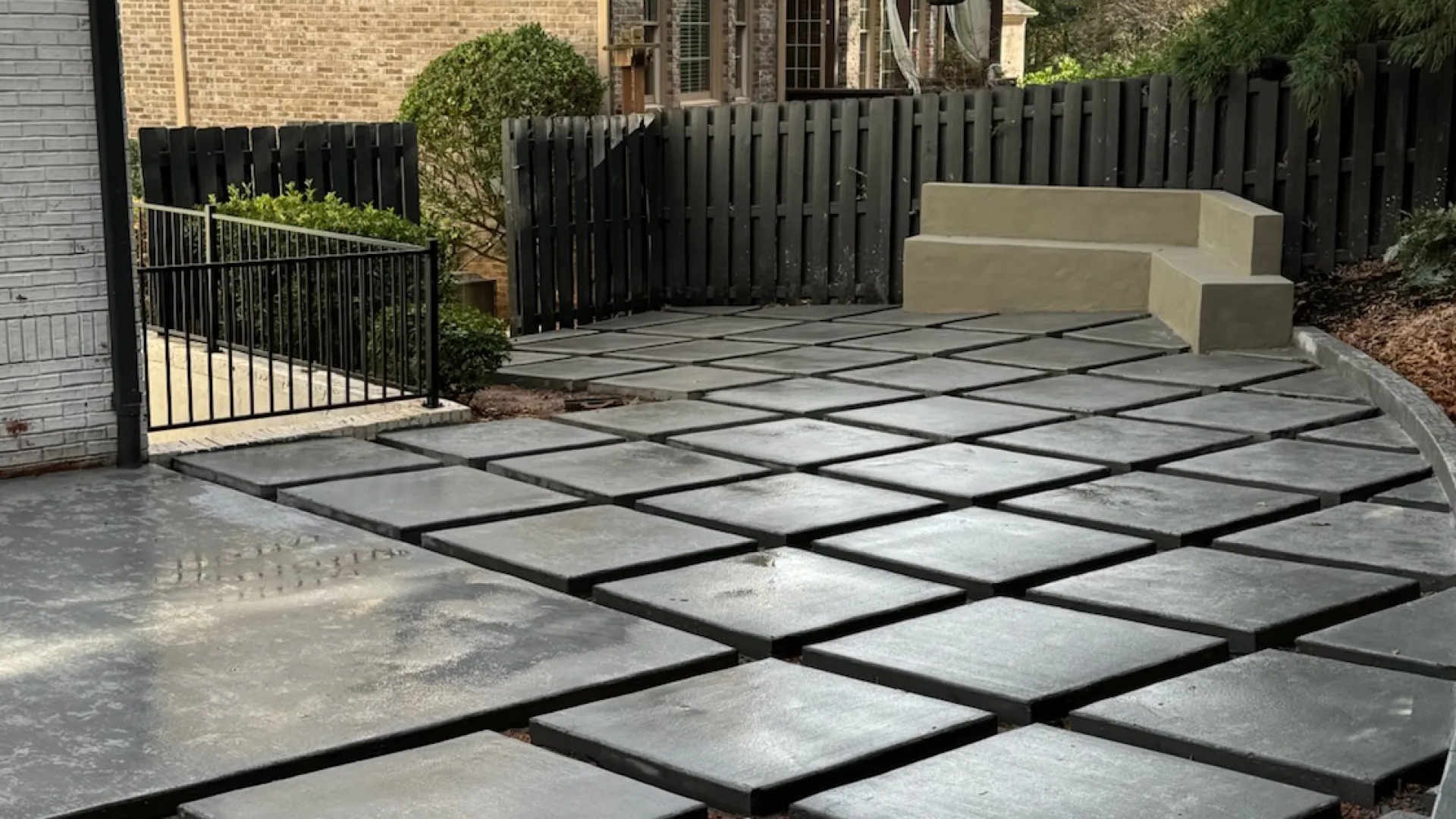
Concrete is a specific building material made from a precise mixture of cement, water, sand, and aggregate (rocks). When mixed and cured, it forms a rigid, monolithic slab. Unlike asphalt, which remains somewhat flexible, concrete is designed to be a "rigid pavement" that maintains its shape and strength for decades.
Key Differences at a Glance
Feature |
Asphalt (Flexible Pavement) |
Concrete (Rigid Pavement) |
Material |
Bitumen (oil-based) & Aggregate |
Cement, Water & Aggregate |
Flexibility |
Flexible; can "rut" under heavy heat |
Rigid; handles high loads without shifting |
Lifespan |
12-20 years |
25-40+ years |
Maintenance |
Needs seal-coating every 2-3 years |
Periodic sealing and cleaning |
Heat Impact |
Softens and absorbs heat |
Reflects heat and stays cool |
The "Atlanta Factor": Which Is Better for Georgia?
In the Southeast, the climate is the deciding factor between these two types of pavement.
1. Heat Resistance
Atlanta summers are brutal. Asphalt is an oil-based "flexible" pavement. When temperatures hit 95°F, asphalt softens. This leads to "rutting" (the grooves left by your tires) and "tracking" (oily black residue being tracked into your house). Concrete is rigid and unaffected by high temperatures—it stays hard and stays put.
2. Reflectivity
Ever walk barefoot on a black asphalt driveway in July? It's impossible. Concrete is much lighter in color, meaning it reflects sunlight rather than absorbing it. This keeps your patio or driveway significantly cooler for pets and kids.
3. The Georgia Clay Factor
Our expansive clay soil moves. Concrete's rigidity, when combined with a proper GAB (Graded Aggregate Base), allows it to bridge minor soil movements better than asphalt, which tends to follow the dips and waves of the soil as it settles.
Why Terminology Matters for Your Estimate
When you call a contractor, being specific helps ensure you get an accurate quote.
- "I want to pave my driveway" is vague.
- "I want a concrete driveway" tells the contractor they need to prep for a rigid, long-lasting slab with reinforcement.
Summary: Is Concrete Pavement Right for You?
While asphalt is often cheaper upfront, concrete pavement is almost always the better long-term investment for Atlanta residential properties. It offers 2-3 times the lifespan, requires less messy maintenance, and adds significantly more to your home's resale value.