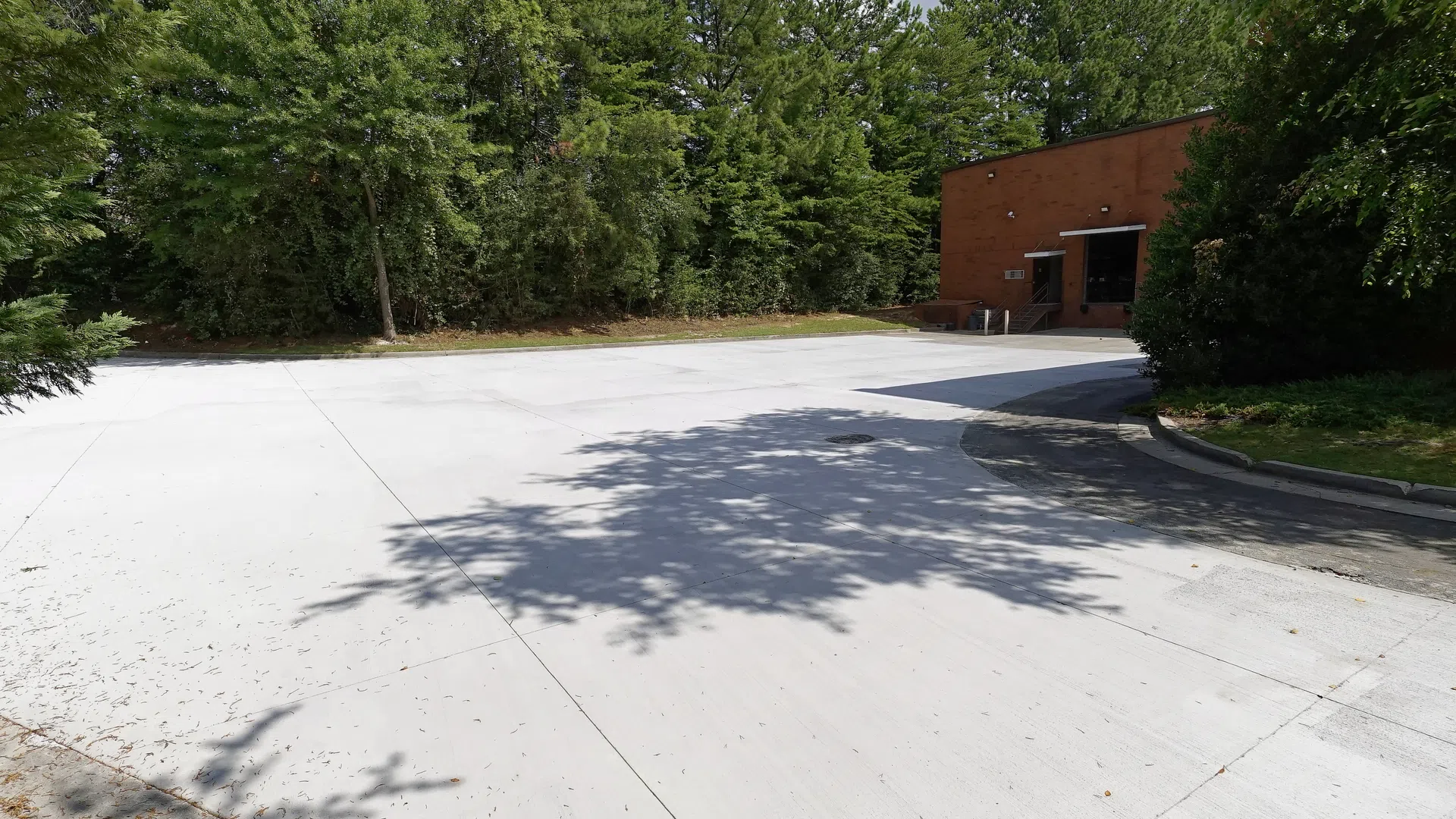
Parking Lot Concrete vs Asphalt
for Atlanta Businesses
Quick Answer: A properly installed concrete driveway typically lasts 30 to 40 years. In Atlanta, actual lifespan depends heavily on how well the original slab was reinforced and drained, since expansive clay soil and heat put extra stress on a driveway compared to most other regions.
"How long will this last?" is the question we get asked more than almost any other, and it's a fair one, since a driveway is one of the more expensive things most homeowners will pour in their lifetime. The honest answer is that the number on the brochure and the number you'll actually get depend heavily on decisions made before the truck even shows up.
What We Check First When Estimating a Driveway's Remaining Life
When we're asked to evaluate an existing driveway rather than build a new one, we're not just counting cracks. We look at whether the cracking is concentrated in specific zones (a sign of localized drainage or soil issues) or spread evenly across the slab (more often a sign of age and normal wear), how deep any existing patches go, and whether the edges of the slab, which take the most abuse from mowers, foot traffic, and vehicle turns, are holding up better or worse than the field of the driveway. That pattern tells us more about remaining lifespan than the driveway's age alone.
Average Lifespan, and Why It's a Range
Under normal conditions, a properly installed concrete driveway lasts 30 to 40 years, roughly double what we'd expect from an asphalt driveway, covered in asphalt vs. concrete driveways. That range is wide on purpose. A driveway with proper rebar, a well-compacted base, and correct drainage will land at the high end. Skip any one of those, and it's realistic to see real problems inside of 10 to 15 years, well before the concrete itself has "worn out" in any meaningful sense.
The Real Signs a Driveway Is Reaching the End
It's rarely one dramatic event. More often, it's a driveway that's had three or four different sections patched over the years, where the patches themselves are starting to crack, where you can see a slight rise-and-fall in the surface if you look down the length of it at a low angle, or where edges are crumbling in more than one spot. Individually, none of these demand immediate action. Together, they're telling you the driveway is nearing a point where repair costs start rivaling replacement costs. See resurfacing vs. replacement and how to repair a cracked concrete driveway for how we'd walk through that decision.
What Actually Shortens a Driveway's Life in Atlanta
In our experience, it's rarely the concrete mix itself that fails first, it's almost always one of three things: a base that wasn't compacted properly before the pour, drainage that was never corrected (see concrete driveway drainage), or reinforcement that was skipped or under-spec'd to save money on the original job. All three are invisible once the concrete is down, which is exactly why they matter so much at the planning stage. Heat and humidity add ongoing stress on top of that, detailed in how heat and humidity affect concrete.
Extending the Life You've Already Got
Reseal every 2-3 years, fix small cracks the season you notice them rather than the season after, and keep drainage clear. None of this is expensive compared to what it prevents.
Our Take
We'd genuinely rather spend twenty minutes explaining why your driveway has another 10 good years in it than talk you into a replacement it doesn't need. When a driveway is done, though, we'll say so plainly, because a slab that's been patched five times isn't saving anyone money anymore.