Stamped Concrete Slip Resistance: What Homeowners Should Know
Stamped Concrete Looks Great
— But What About Safety?
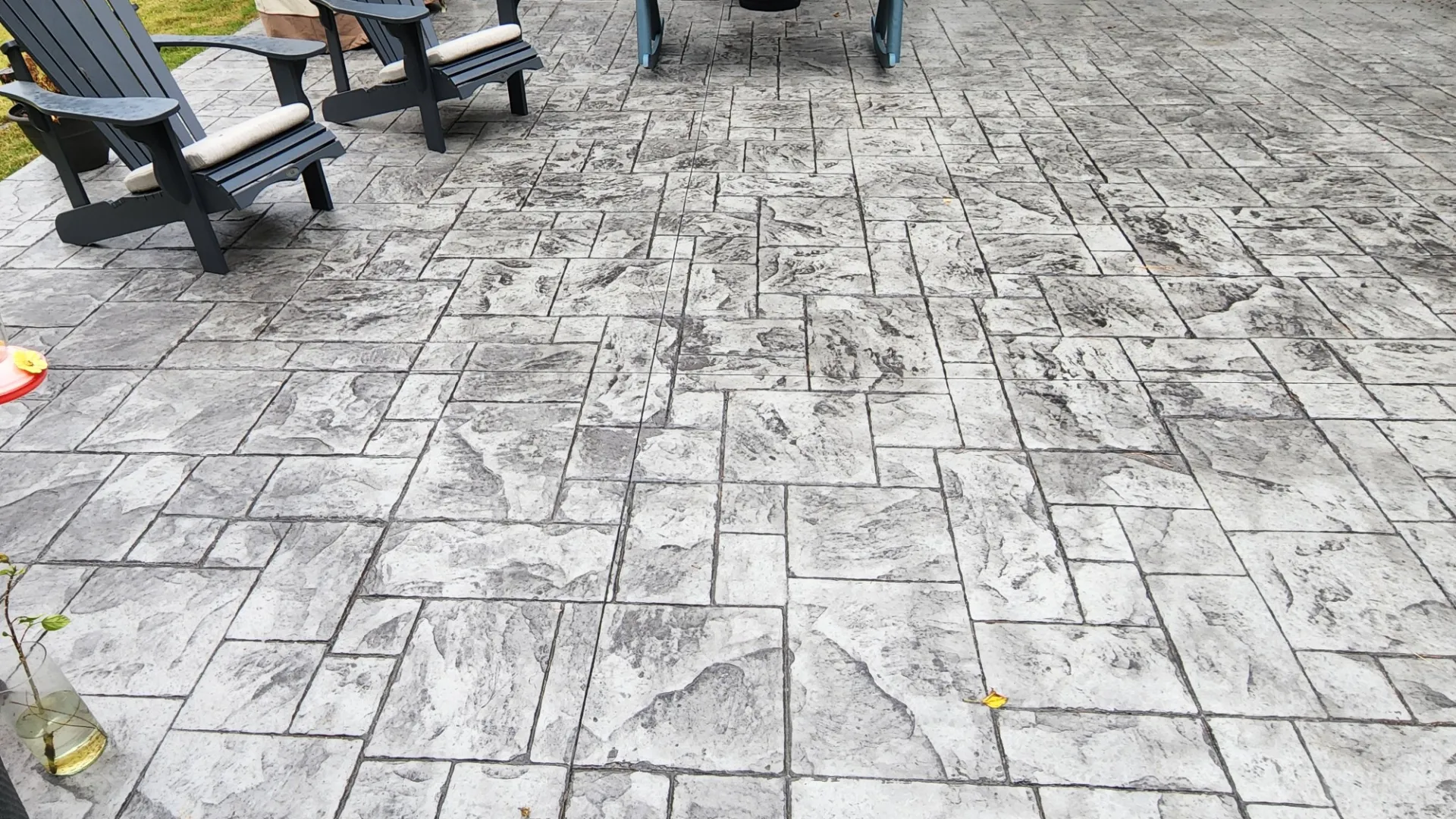
Stamped concrete is popular for patios, driveways, pool decks, walkways, and outdoor living spaces because it mimics stone, brick, or tile at a more affordable price. It delivers beautiful texture and visual appeal while remaining durable and low maintenance.
One of the most common questions homeowners ask before installing it is: Is stamped concrete slippery?
The short answer: Stamped concrete can become slippery under certain conditions — but it doesn't have to be. With proper finishing, sealing, and maintenance, stamped concrete can be made safe and slip-resistant.
Let's break down what actually affects traction and how to prevent safety issues.
What Makes Stamped Concrete Slippery?
Several factors influence how slippery a stamped surface feels:
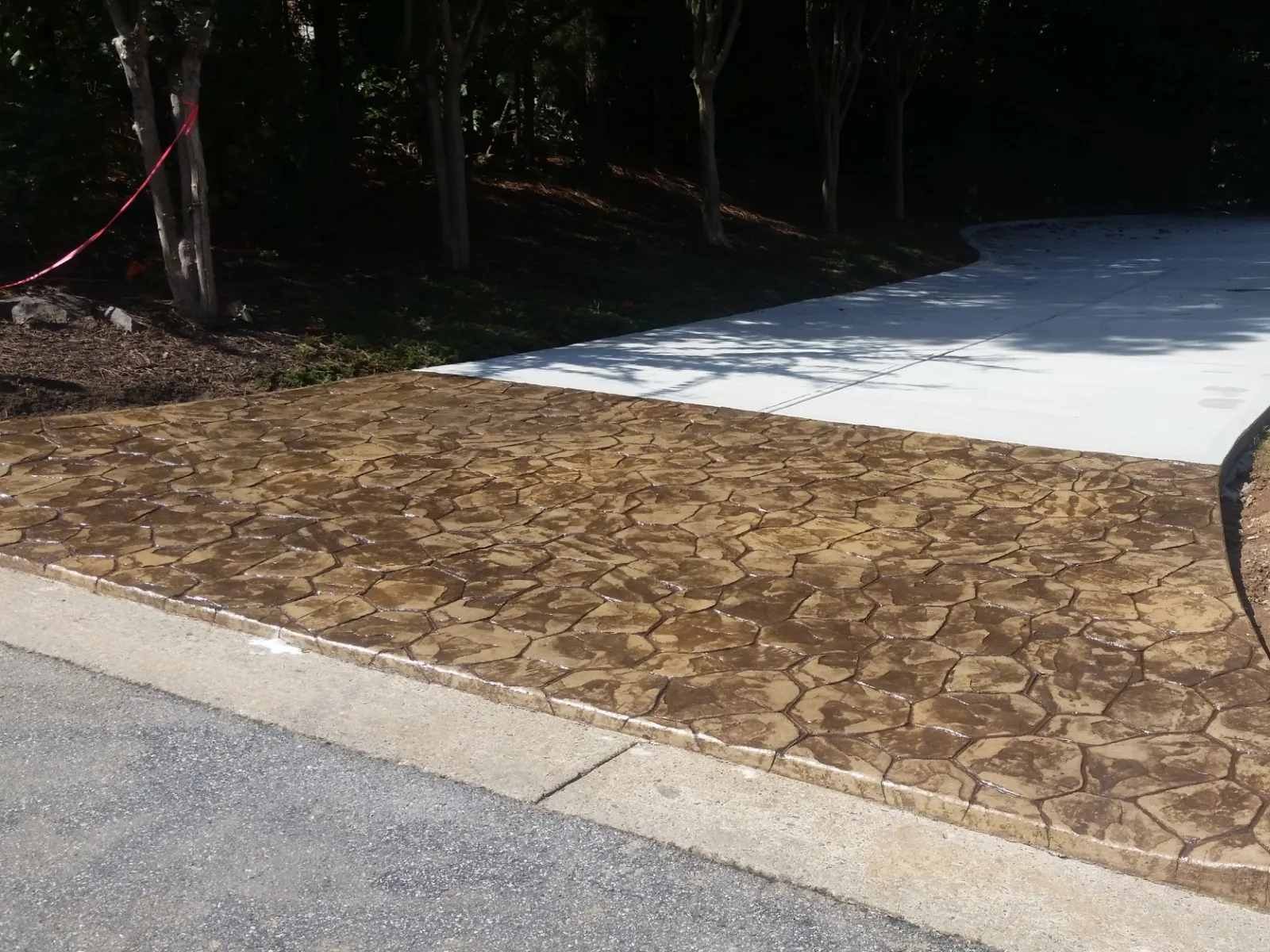
1. Sealers Create a Smooth Surface
Stamped concrete is almost always sealed to protect color and prevent moisture penetration. Some sealers create a glossy finish that reduces surface friction — especially when wet.
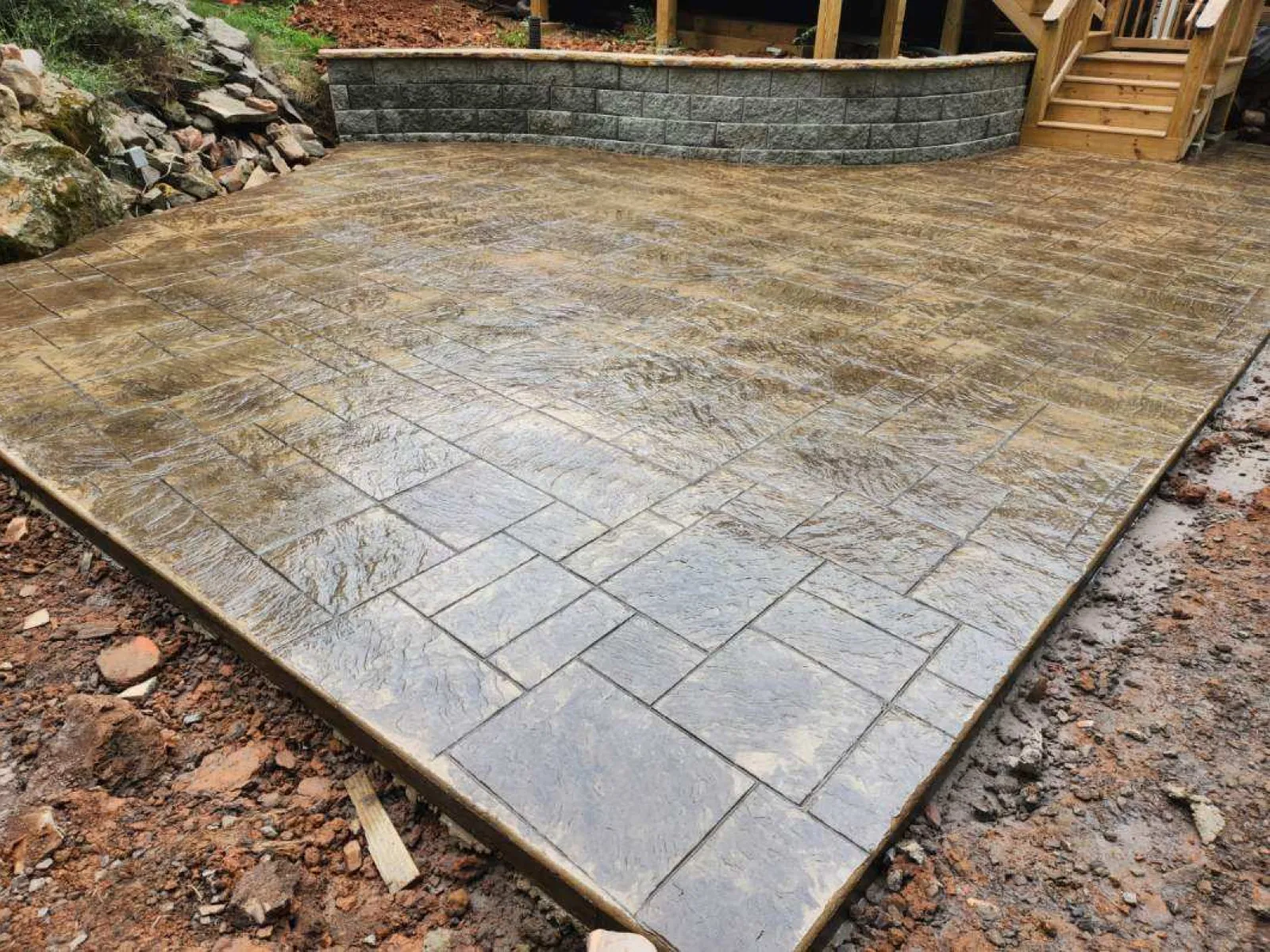
2. Moisture and Environmental Conditions
Rain, pool splash, morning dew, and humidity can create slick conditions. Shaded areas that stay damp longer tend to be more slippery.
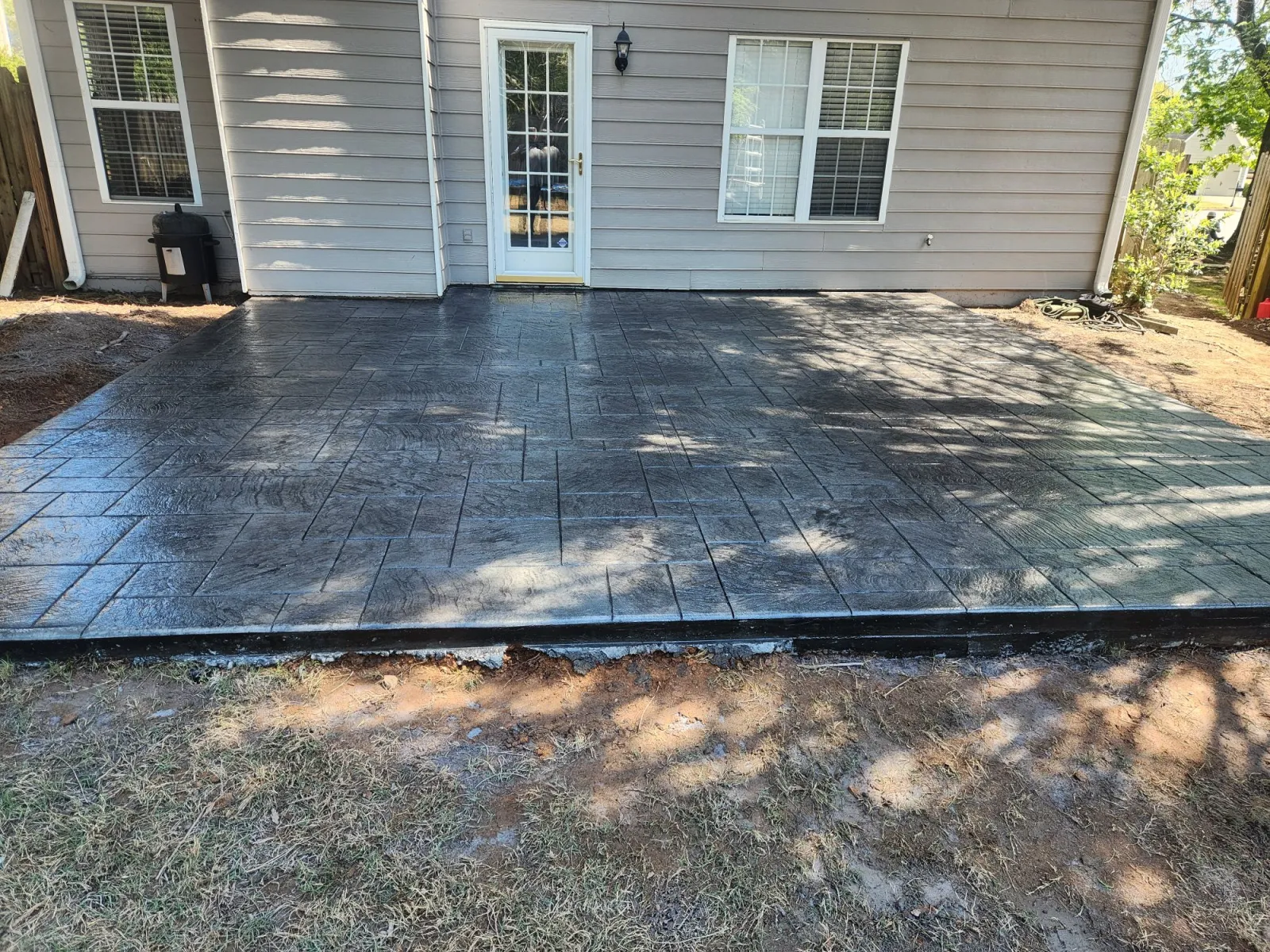
3. Algae, Dirt, and Build-Up
Outdoor concrete naturally collects pollen, dirt, mildew, and algae. These contaminants significantly reduce traction if not cleaned regularly.
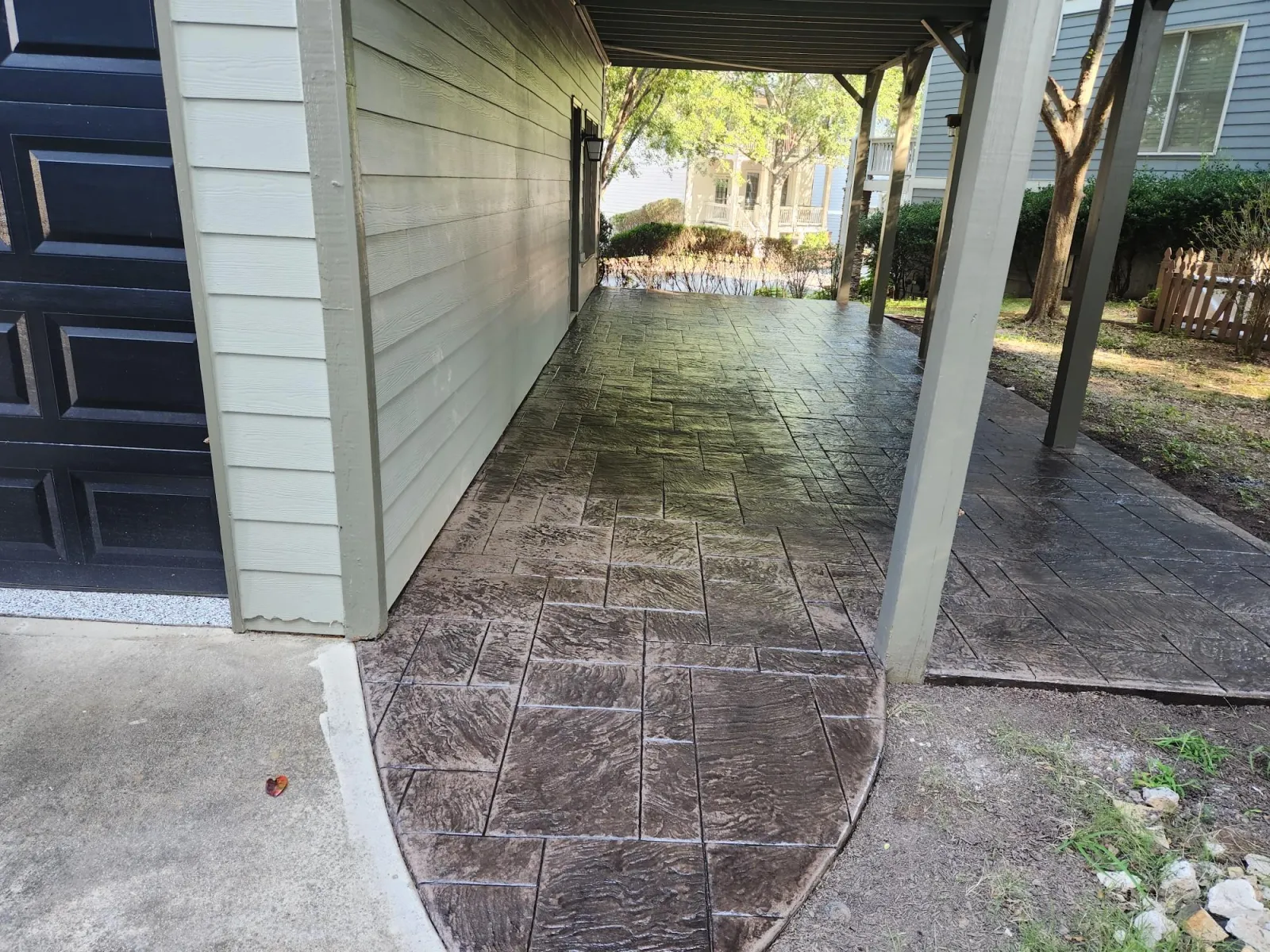
4. Texture Depth of the Stamp Pattern
Some stamp patterns have deeper texture that provides more grip, while smoother decorative patterns can feel slicker.
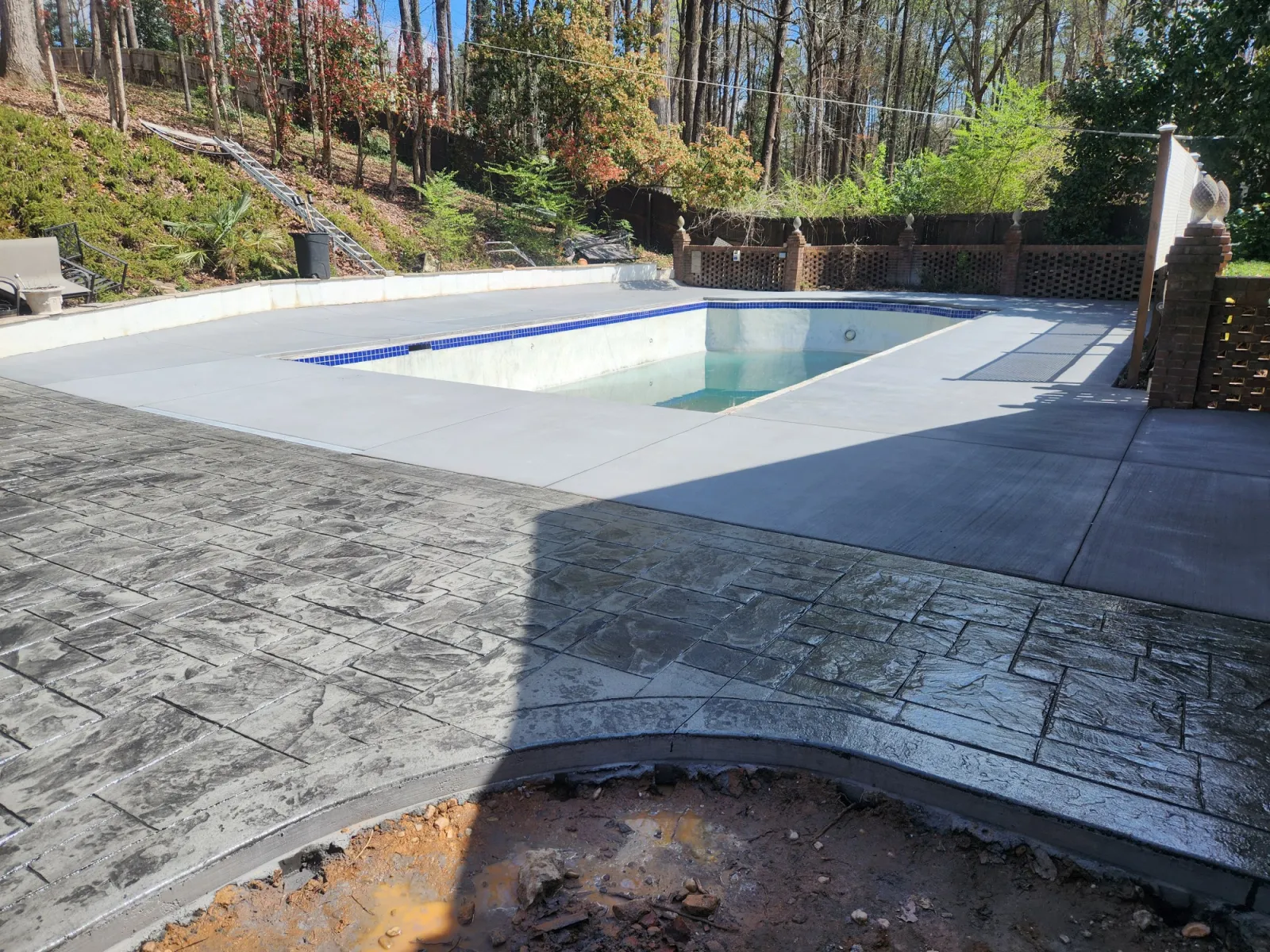
Is Stamped Concrete Safe Around Pools?
Stamped concrete can absolutely be used around pools — but it must be treated correctly. Pool decks experience constant water exposure, so slip-resistant additives and proper maintenance are especially important.
If installed properly, stamped concrete performs well in pool environments while offering excellent durability and design flexibility.
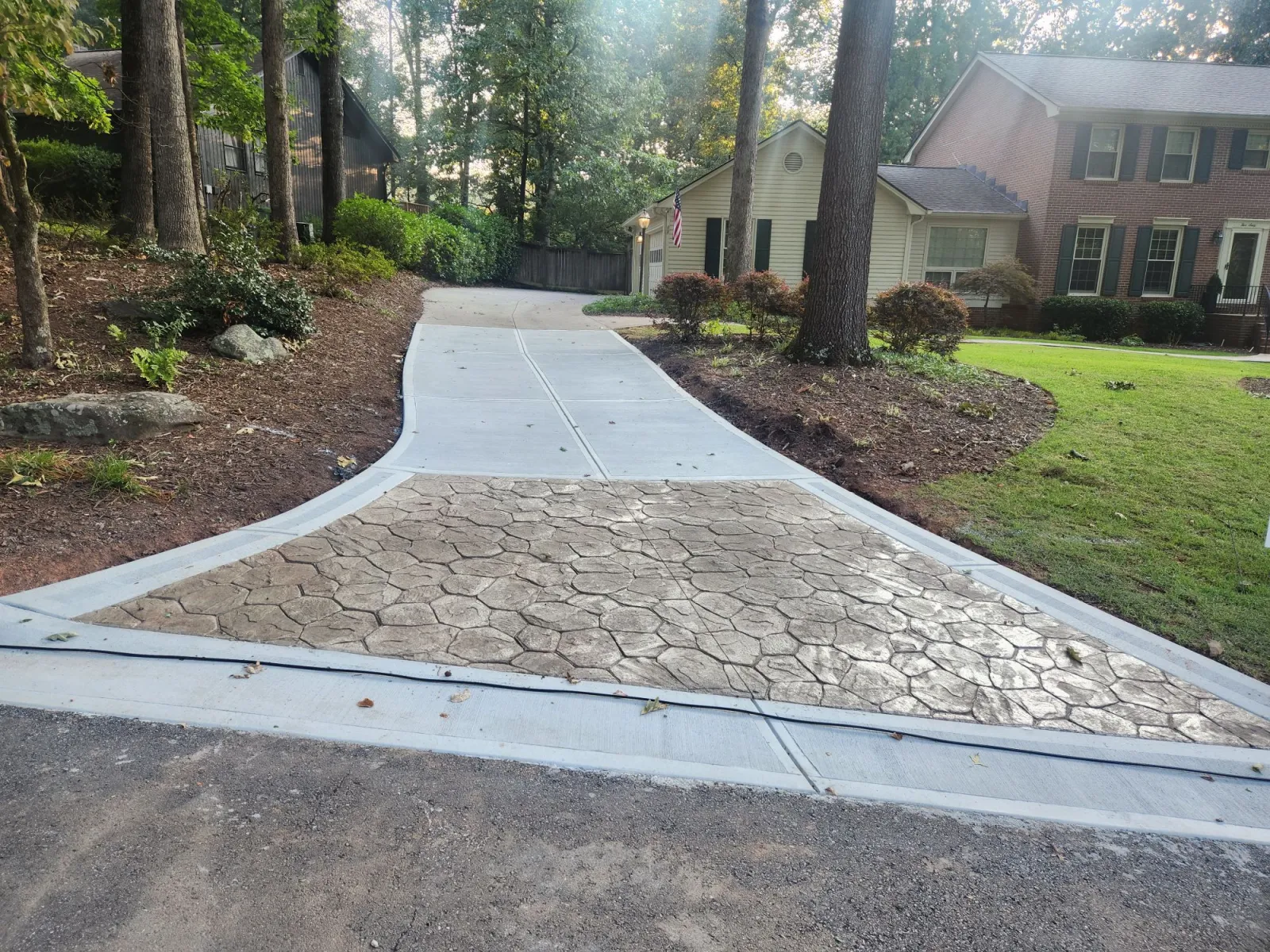
When Slippery Concrete Becomes a Bigger Issue
If a stamped surface remains slick even after cleaning or adding traction, the sealer may be failing or the surface may need professional resurfacing. Ignoring slick surfaces increases fall risk and liability.
A professional evaluation can identify the safest corrective solution.
Beauty and Safety Can Absolutely Coexist
Stamped concrete doesn't have to be slippery. With the right materials, surface prep, and maintenance, you can enjoy the look of decorative concrete without sacrificing safety.
If you're concerned about traction or need resurfacing support, Sudlow Concrete provides professional concrete solutions throughout the Atlanta area.