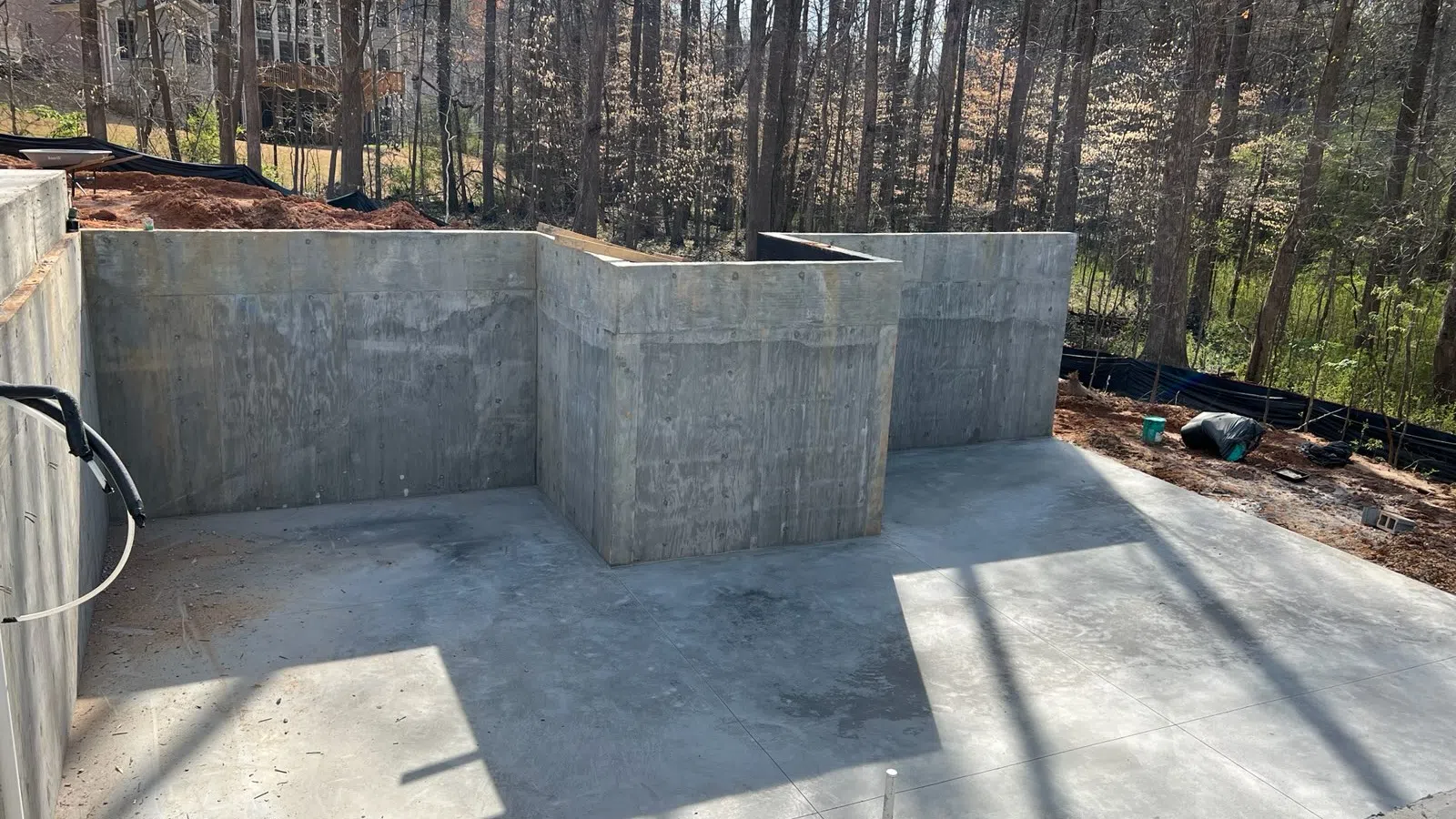
How to Waterproof a Concrete Foundation
Quick Answer: Foundation waterproofing typically combines exterior methods, like drainage boards and membrane coatings, with interior methods like sealants and drainage systems. In Atlanta, a layered approach works far better than relying on one method alone.
More foundation problems trace back to water than to any other single cause we see, and it's rarely the water you'd expect. It's not usually a flood. It's the slow, unglamorous kind: soil that stays damp two days longer than it should after a normal rain, quietly pushing on a wall, year after year, until something gives.
What We Check First on a Moisture Call
Before we talk about membranes or sealants, we walk the perimeter of the house after rain if we can time it that way. Where's the grading pointed? Are downspouts actually carrying water away from the foundation, or just dumping it a foot from the wall? Is there a spot where mulch or landscaping is holding moisture directly against the concrete? In our experience, correcting these basics solves more moisture problems than any product we could apply, and it's the cheapest fix on this entire list.
What Foundation Water Damage Actually Looks Like
It rarely announces itself as a puddle. More often, it's a white, chalky residue on a basement wall (efflorescence, mineral deposits left behind as water evaporates through the concrete), a musty smell that shows up specifically after humid weeks, or paint that's bubbling and peeling on a below-grade wall for no obvious reason. Any one of these is worth taking seriously before it progresses to visible cracking.
Exterior Waterproofing Methods
Applied to the outside of the foundation wall before backfilling, exterior waterproofing stops water before it reaches the concrete at all, which makes it the more effective approach when it's accessible. This includes a waterproof membrane or coating on the wall itself, a drainage board that channels water down and away, and a perimeter (French) drain at the footing level.
Interior Waterproofing Methods
On an existing home, where excavating the full exterior isn't always practical, interior sealants and interior drainage systems that route water to a sump pump manage moisture after it reaches the wall rather than stopping it beforehand. We'll often recommend pairing this with improved surface grading rather than relying on interior methods in isolation.
Decision Framework: New Build vs. Existing Home
New foundation: full exterior waterproofing (membrane, drainage board, perimeter drain), since the wall is fully accessible before backfill. This is the one chance to do it right without excavation later.
Existing home, no active moisture symptoms: improve surface grading and downspout drainage as preventive maintenance, add a quality sealer.
Existing home, active dampness or efflorescence: interior drainage system paired with corrected surface grading. Reserve exterior excavation for severe, ongoing cases.
Common Mistakes We See
The most common one is applying an interior sealant or paint over a wall that's still under active hydrostatic pressure from outside, which almost always fails within a season or two because it's treating a symptom, not the source. The second is landscaping choices, mulch beds banked right up against the foundation, that trap moisture against the wall without anyone realizing that's what's happening.
Our Approach
We'd rather fix your grading for a few hundred dollars than sell you an interior drainage system that's masking a problem an afternoon of yard work could solve. When excavation genuinely is the right call, we'll explain exactly why the cheaper options won't hold up for your specific situation. For sealer options specifically, see the pros and cons of different concrete sealers and how to seal concrete.