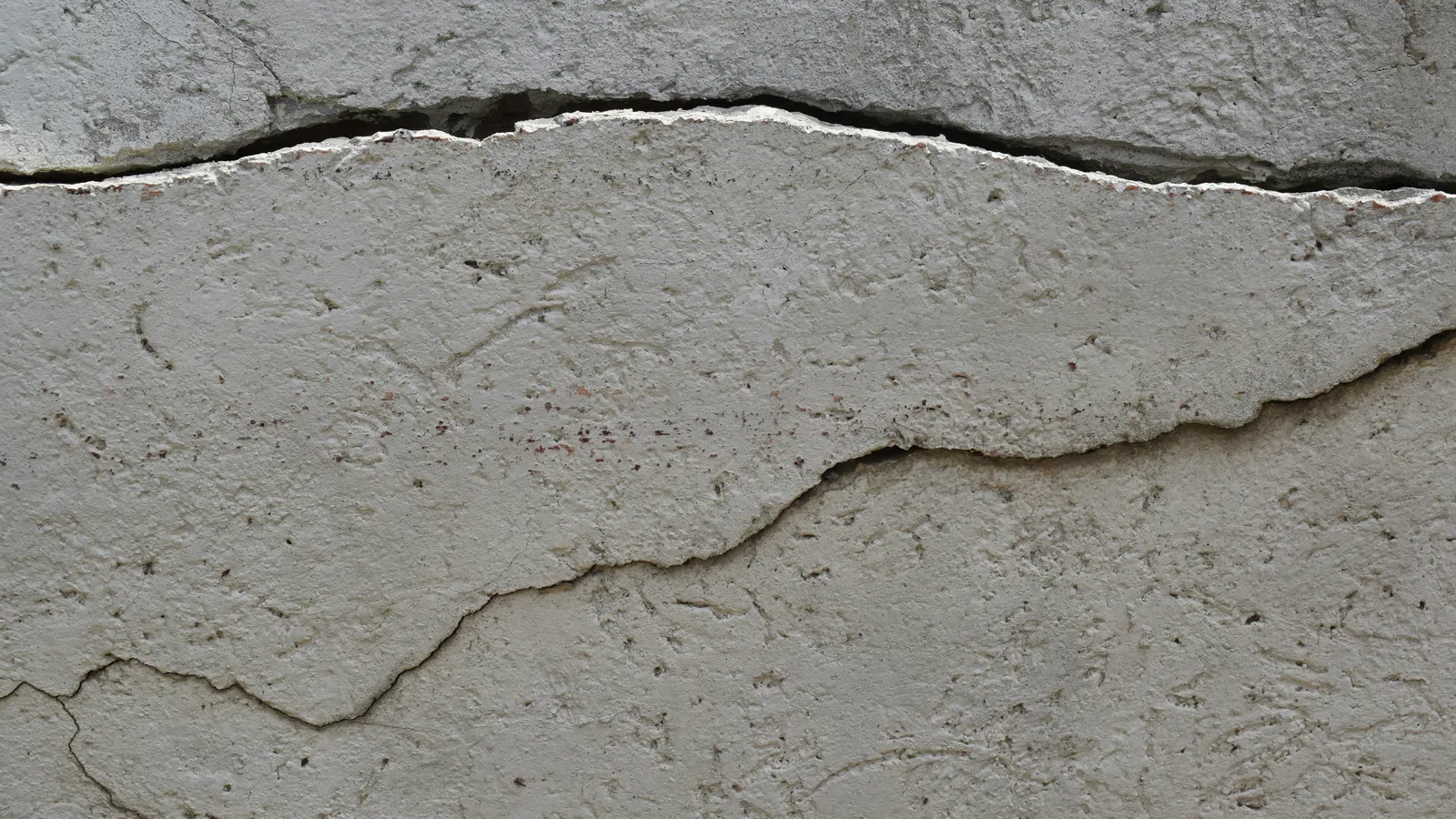
How to Repair a Cracked Concrete Driveway
in Atlanta
Quick Answer: Hairline cracks under 1/8 inch wide are usually cosmetic and can be filled with a concrete crack sealant. Cracks wider than 1/4 inch, cracks with a raised or uneven edge, or cracks that keep growing are usually a sign the slab has shifted, which is common in Atlanta's expansive clay soil, and typically call for professional repair rather than a DIY patch.
Most driveway cracks get reported to us the same way: "it was fine, and then one day it wasn't." In reality, the crack was almost always there for months before anyone noticed it, quietly widening a little more with every wet-dry cycle Georgia's clay soil puts it through. Here's what a crack is actually telling you, and how to tell a five-minute fix from a real problem.
What a Problem Crack Actually Looks and Feels Like
Forget the measuring tape for a second. In practice, most homeowners notice a crack matters when they can catch a fingernail or the edge of a house key in it, or when a bike tire or stroller wheel audibly bumps over it instead of rolling smoothly across. If you can wedge a nickel into the gap on its edge, that's roughly a 1/4-inch crack, and that's the point where we stop calling it cosmetic. If you drag your palm flat across the crack and one side is noticeably higher than the other, even a little, that's an offset, and offsets are what turn into stubbed toes and twisted ankles.
The Decision Framework: DIY, Repair, or Replace?
Here's the same logic we walk through on an inspection, condensed:
- If the crack is a thin hairline, hasn't changed in months, and there's no offset: it's almost certainly a shrinkage crack from curing. Seal it and move on.
- If the crack is wider than 1/4 inch but the slab is still flat and level on both sides: it's likely soil movement without settling. This usually calls for a structural sealant or epoxy injection rather than a surface patch.
- If there's an offset you can feel with your hand or see a shadow line at sunset: part of the slab has settled. This is a mudjacking, polyfoam lifting, or section-replacement conversation, not a patch job.
- If you're seeing three or more separate cracks, or a crack that's spread noticeably since last season: the base underneath the driveway has likely failed in more than one spot, and it's worth having the whole slab evaluated rather than chasing individual cracks one at a time.
What We Check First on a Driveway Crack Inspection
When we walk a cracked driveway, we're not just looking at the crack, we're looking at where it sits relative to the garage, the street, and any low points in the yard. A crack that starts right where downspout runoff lands is telling a very different story than one that appears near a large oak's root zone. We also check whether the crack follows an existing control joint (usually fine) or cuts across the slab at a random angle (usually not). That context matters more than the crack's width alone.
DIY Repair: When It's Genuinely OK
For a true hairline crack, a DIY fix holds up fine. Clean the crack out with a wire brush and shop vac, run a concrete-specific crack sealant or vinyl patching compound into the gap with a caulk gun, tool it level with the surrounding surface, and keep vehicles off it while it cures. The goal isn't cosmetics, it's keeping water out. Water sitting in an open crack through a Georgia winter is what turns a hairline into a quarter-inch crack by spring.
Common Mistakes We See Homeowners Make
The most common one, by far, is patching the same crack two or three times over a couple of years instead of asking why it keeps coming back. A crack that reopens after a proper patch almost always means the ground beneath it is still moving, and no amount of sealant fixes that. The second most common mistake is waiting until a crack becomes a trip hazard before addressing it at all, at which point what could have been a $150 sealant job has become a $2,000 section replacement.
How We Approach Driveway Crack Repair
Our general philosophy is that we'd rather tell a homeowner honestly that their crack is a $200 fix than upsell a driveway replacement they don't need yet. At the same time, we won't talk someone into a surface patch if we can see the base has failed, since that's just delaying a bigger bill. If a crack points to a deeper issue, drainage, soil movement, or reinforcement that was never there to begin with, we'll walk through exactly what we're seeing and why, so the decision is yours to make with real information. For cracks that turn out to be more than surface-deep, see what causes driveway cracking in Atlanta and resurfacing vs. replacement.
Preventing the Next Crack
Reseal every 2-3 years, keep an eye on any large trees whose root systems are creeping toward the slab, and make sure water isn't pooling against the driveway after a storm. Our driveway repair and driveway replacement services both start with a straightforward inspection, and if all you need is a $150 patch, that's what we'll tell you.