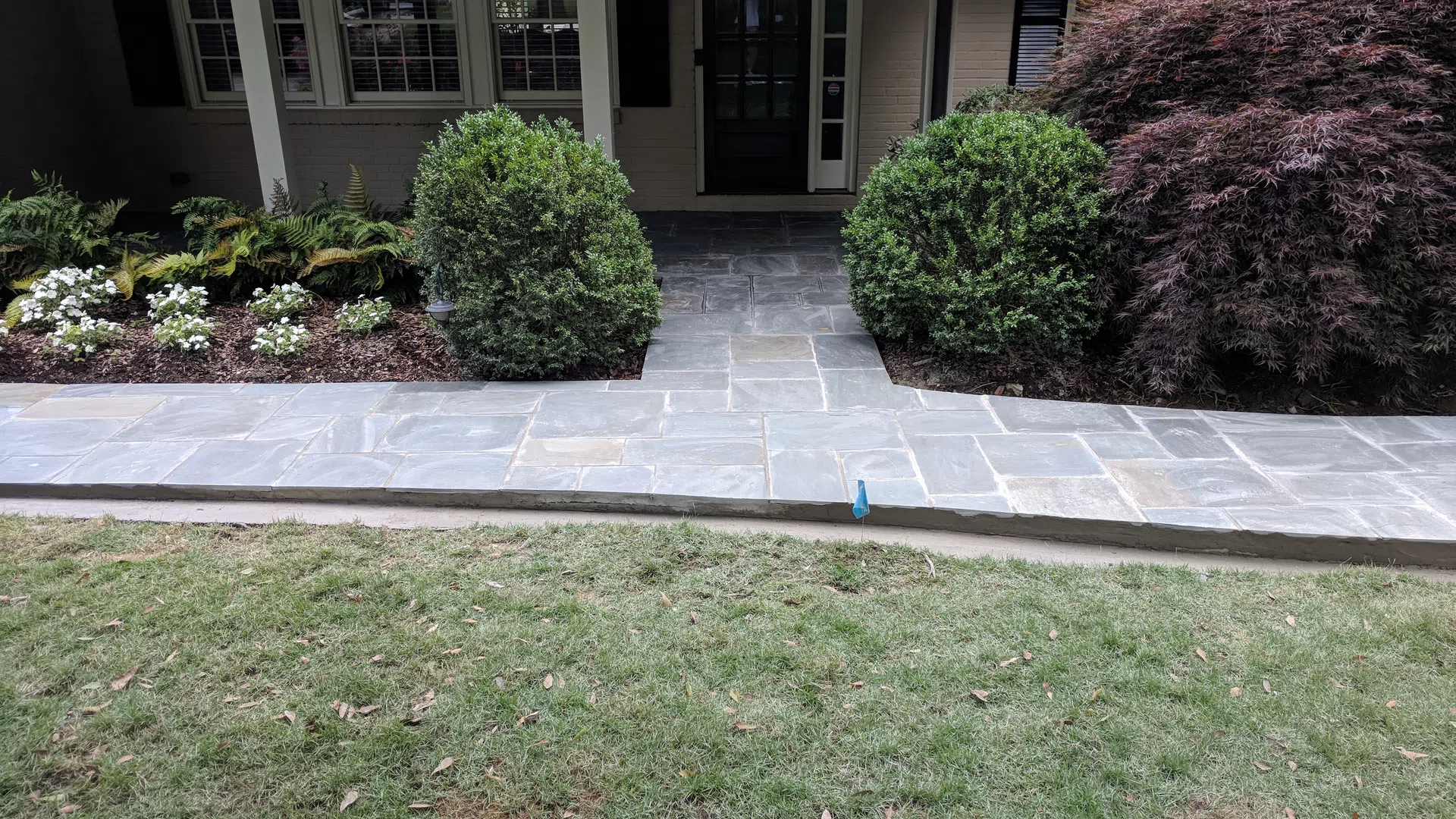
How to Fix a Sunken Concrete Sidewalk
In Atlanta
How to Fix a Sunken Concrete Sidewalk
All You Need To Know

A sunken slab is usually caused by soil erosion or settling underneath it. Minor sinking can often be corrected with mudjacking or polyfoam lifting. More severe sinking or a badly cracked slab typically requires full replacement of that section.
You can usually spot a sunken sidewalk slab before you consciously register what's wrong with it, your foot catches slightly, or you notice a thin shadow line where one slab sits lower than its neighbor. That small shadow is the whole story: something underneath gave way.

What a Sunken Slab Actually Looks Like
It's rarely dramatic at first. A slab that's dropped half an inch doesn't look broken, it just looks like there's a slightly darker seam where the two panels meet, or like the grass along the low edge is a little greener from extra water collecting there. It's only when you walk it in the evening, when low sunlight throws a shadow across that tiny ledge, that it becomes obvious.
What We See Most Often Causing This
More often than not, it traces back to water: a downspout draining right at the edge of a walkway, slowly washing soil out from underneath it over several rainy seasons, or a low spot that collects runoff every storm. Georgia's clay soil compounds the problem, since it shifts and settles unevenly as it cycles between saturated and dry. Tree roots and a base that was never compacted properly round out the usual suspects.
Decision Framework: Lift or Replace?
- Slab is otherwise intact, no major cracking, sunk evenly: mudjacking or polyfoam lifting, raising it back to level without removing it.
- Slab is cracked or crumbling in addition to sinking: full section replacement, since lifting a damaged slab just relocates the problem.
- Sinking is tied to an active drainage issue: address the drainage as part of the fix, whichever repair method you choose, or the same section will likely sink again.
Mudjacking vs. Polyfoam, in Practice
Mudjacking pumps a cement-based slurry beneath the slab to fill the void and lift it; it's a well-established method and often the lower upfront cost. Polyfoam lifting injects an expanding polyurethane foam, which is typically faster, lighter, and allows more precise leveling, useful on slabs where you don't want to add much additional weight to already-soft soil. We'll recommend one over the other based on what the specific void and soil conditions call for, not a blanket preference.
Why We Won't Just Lift and Walk Away
Raising a sunken slab without addressing what caused the soil to erode or settle in the first place is a fix that often needs to be redone. If a downspout or grading issue caused the sinking, we'll flag it as part of the recommendation, even if it's not technically part of the repair itself, because otherwise you're paying for the same fix twice.
Trip Hazard and Liability Considerations
An offset of 1/2 inch or more between slabs is generally enough to catch a shoe, which is why sunken sidewalk sections are a common source of fall-related liability concerns. See how to best fix trip hazards on concrete for more on assessing this.
Who's Responsible for Public Sidewalk Repair?
This varies by city and county across the Atlanta metro; in many jurisdictions, the adjacent property owner is responsible for the sidewalk in front of their home, even though it sits on public right-of-way. Worth confirming with your specific local ordinance before starting a repair.