Cleaning Stamped Concrete the Right Way (Without Damaging the Surface)
Stamped Concrete Looks Amazing — Until It Starts Looking Dirty
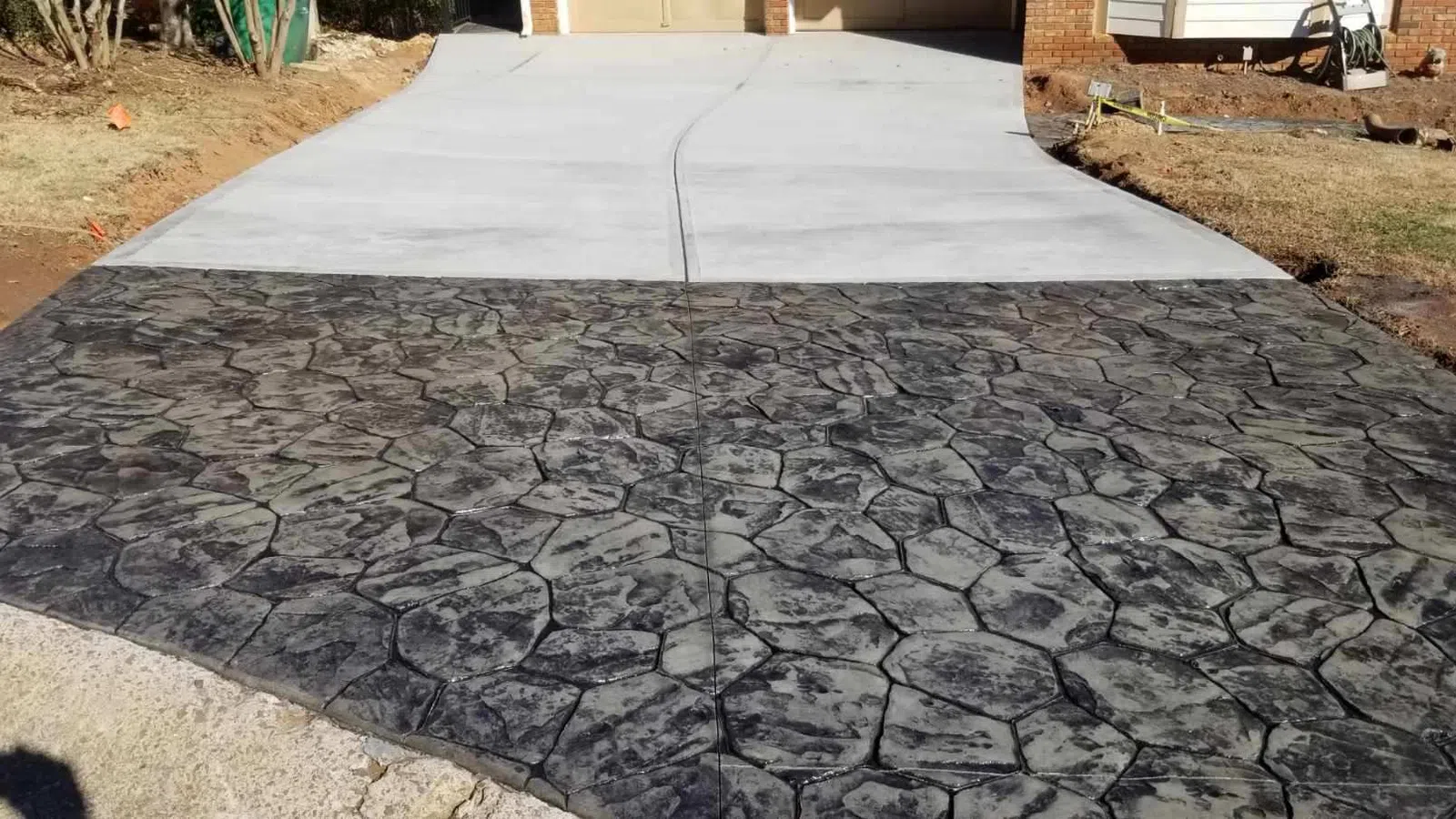
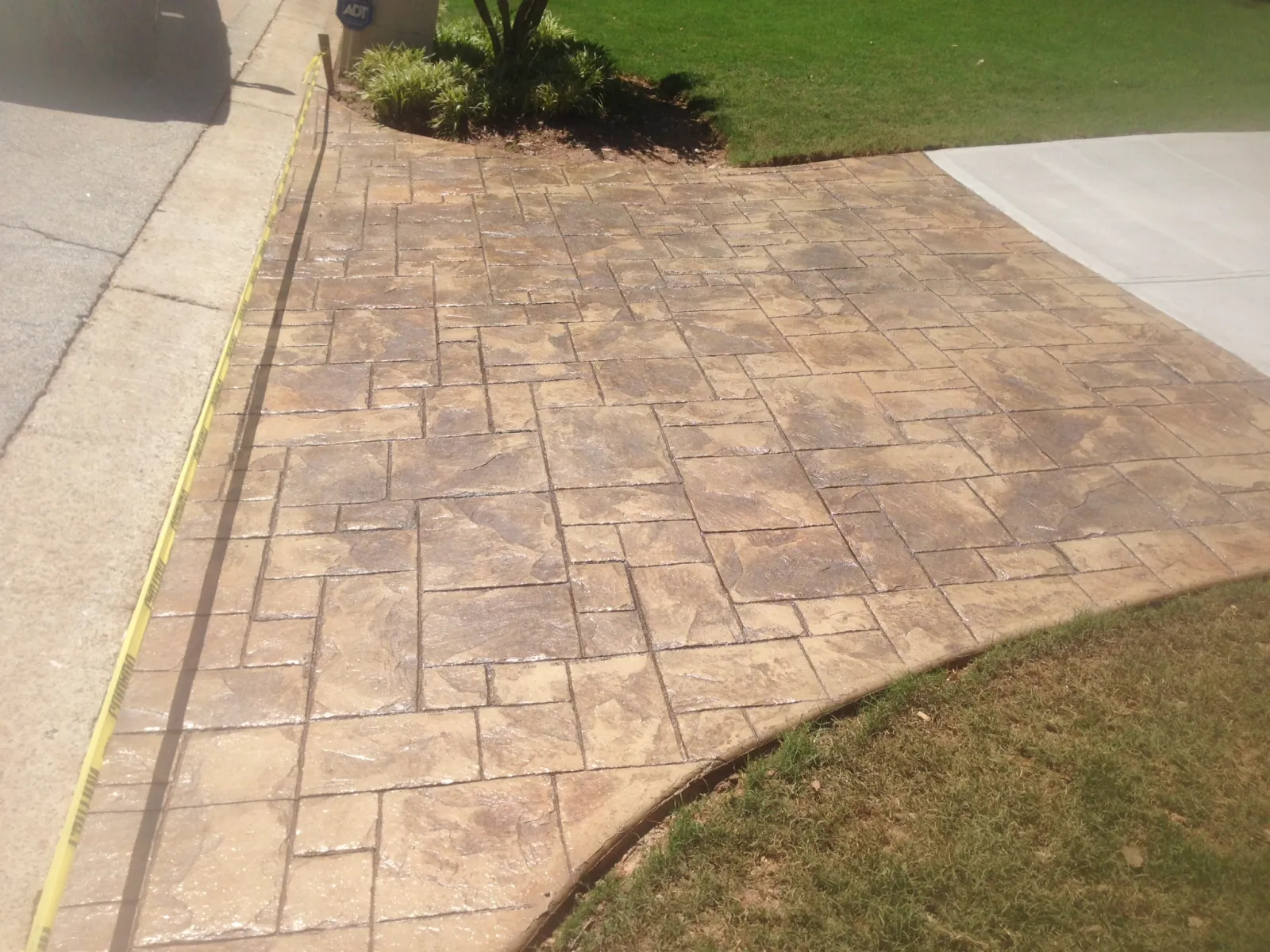
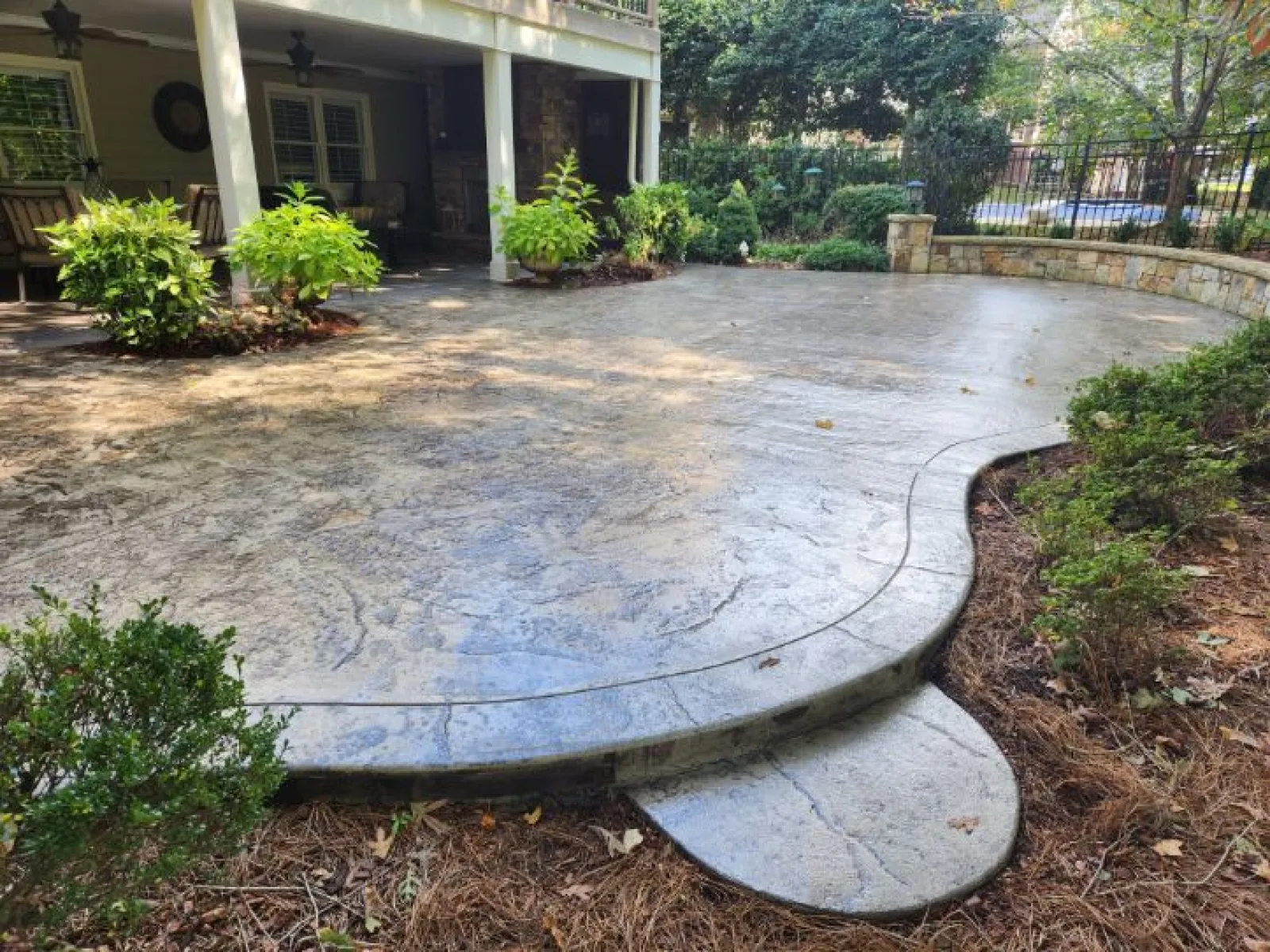
Stamped concrete patios, walkways, driveways, and pool decks bring a lot of character to outdoor spaces. But because they're exposed to the elements, they naturally collect dirt, pollen, mildew, algae, and stains over time.
The good news is stamped concrete is relatively easy to clean — as long as you use the right methods and avoid damaging the protective sealer.
Steps to Clean Stamped Concrete
Here's how to clean stamped concrete safely so it stays beautiful and slip-resistant for years.
Step 1: Remove Loose Debris
Start with a simple sweep or blower to remove leaves, dirt, and debris. This prevents scratching the surface during washing.
For heavily soiled areas, a shop vacuum can help pull debris out of textured grooves.
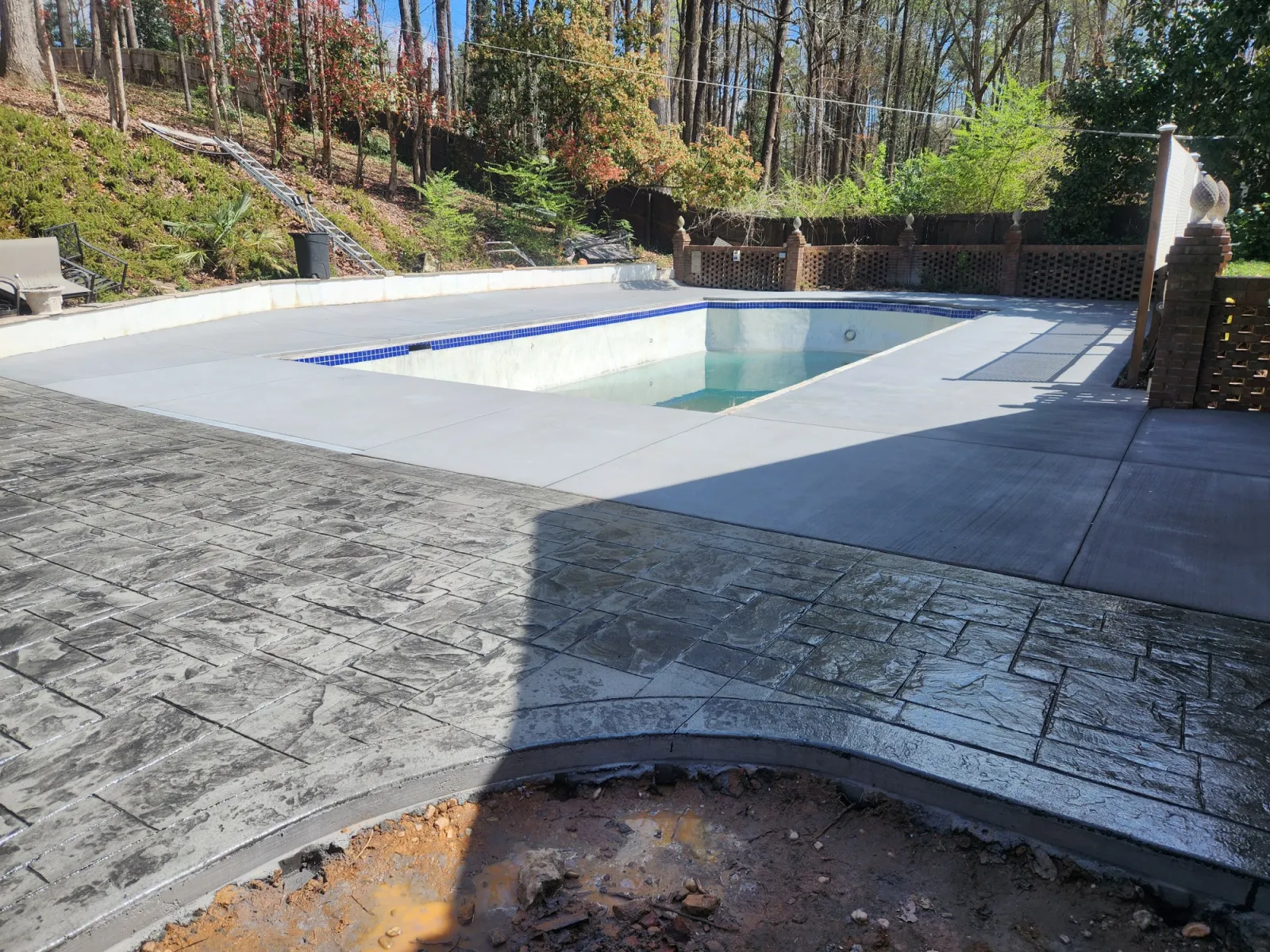
Step 2: Rinse the Surface
Use a garden hose to rinse away surface dust and loosen buildup. This also helps you identify areas that need deeper cleaning.
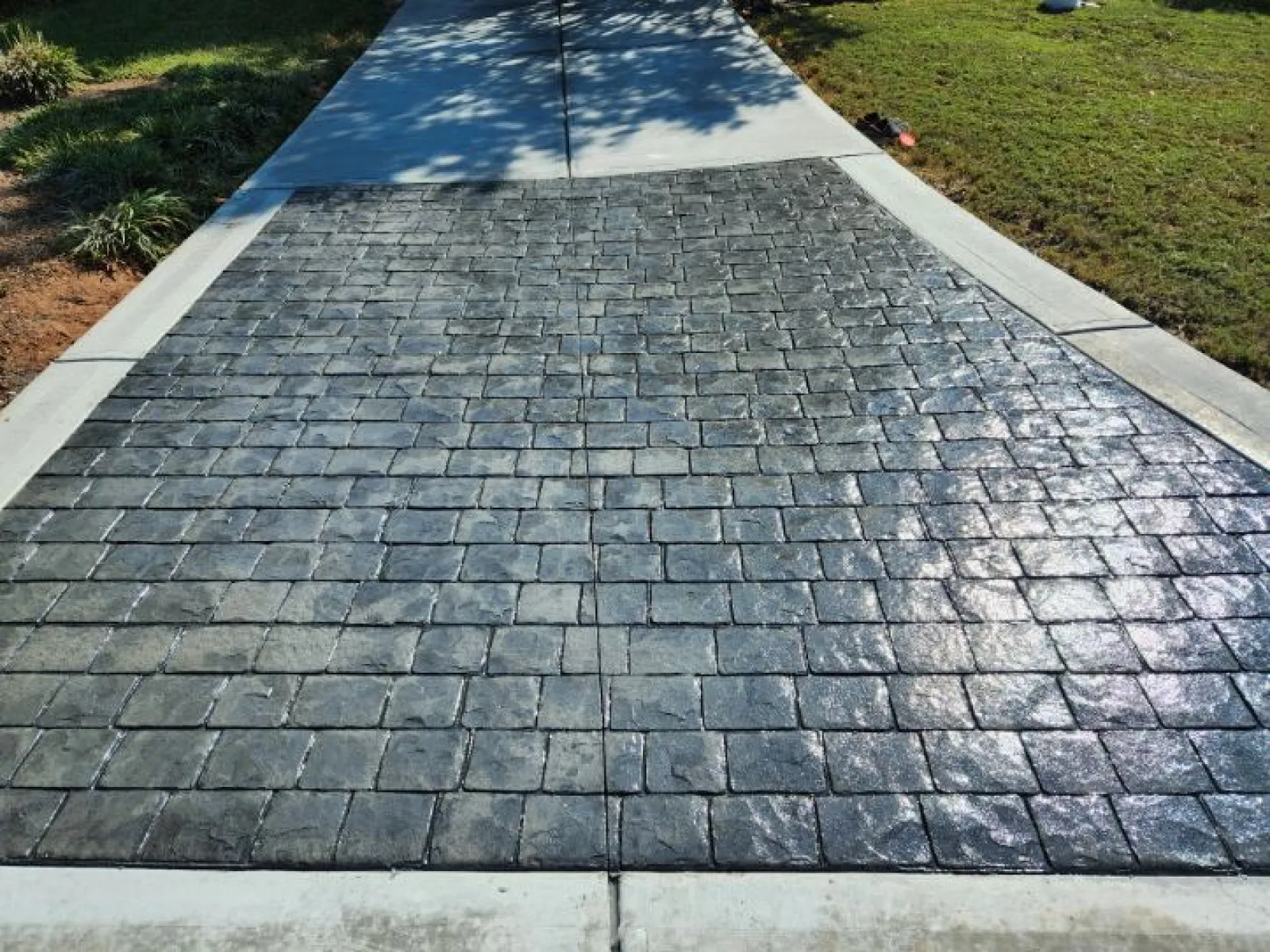
Step 3: Use a Gentle Cleaner
For most routine cleaning:
Mix mild dish soap or a pH-neutral concrete cleaner with warm water.
Scrub using a soft-bristle brush or push broom.
Focus on textured joints and shaded areas where algae tends to grow.
Avoid harsh degreasers, acidic cleaners, or bleach unless recommended for sealed concrete — they can degrade sealers and discolor pigment.
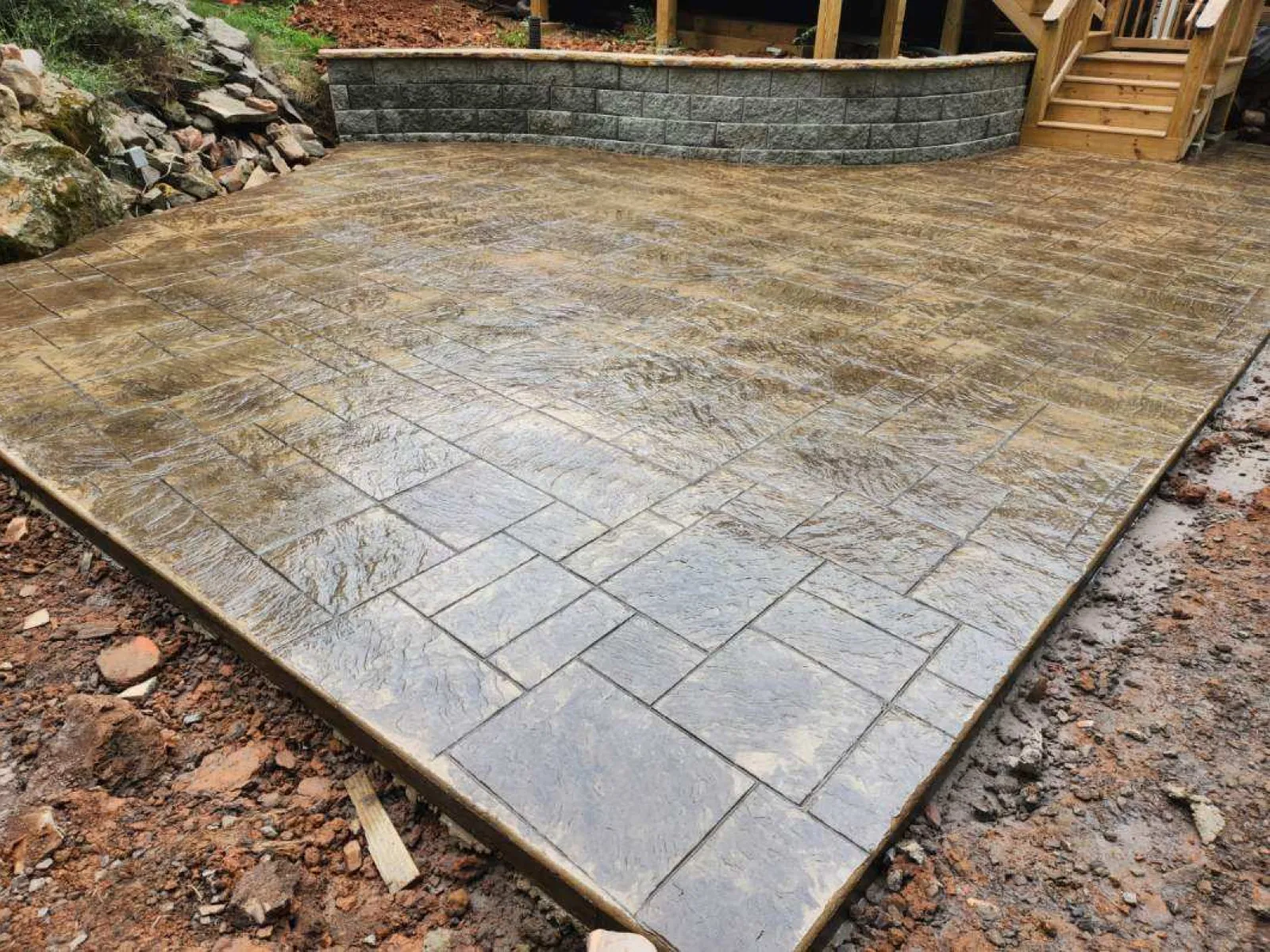
Step 4: Pressure Wash Carefully (If Needed)
Pressure washing can be effective — but must be done cautiously on stamped concrete.
Best practices:
Use low pressure (under 1,500 PSI).
Keep the nozzle moving — don't concentrate in one spot.
Maintain distance from the surface.
Avoid blasting directly into joints or edges.
Excessive pressure can strip sealers and damage surface texture.
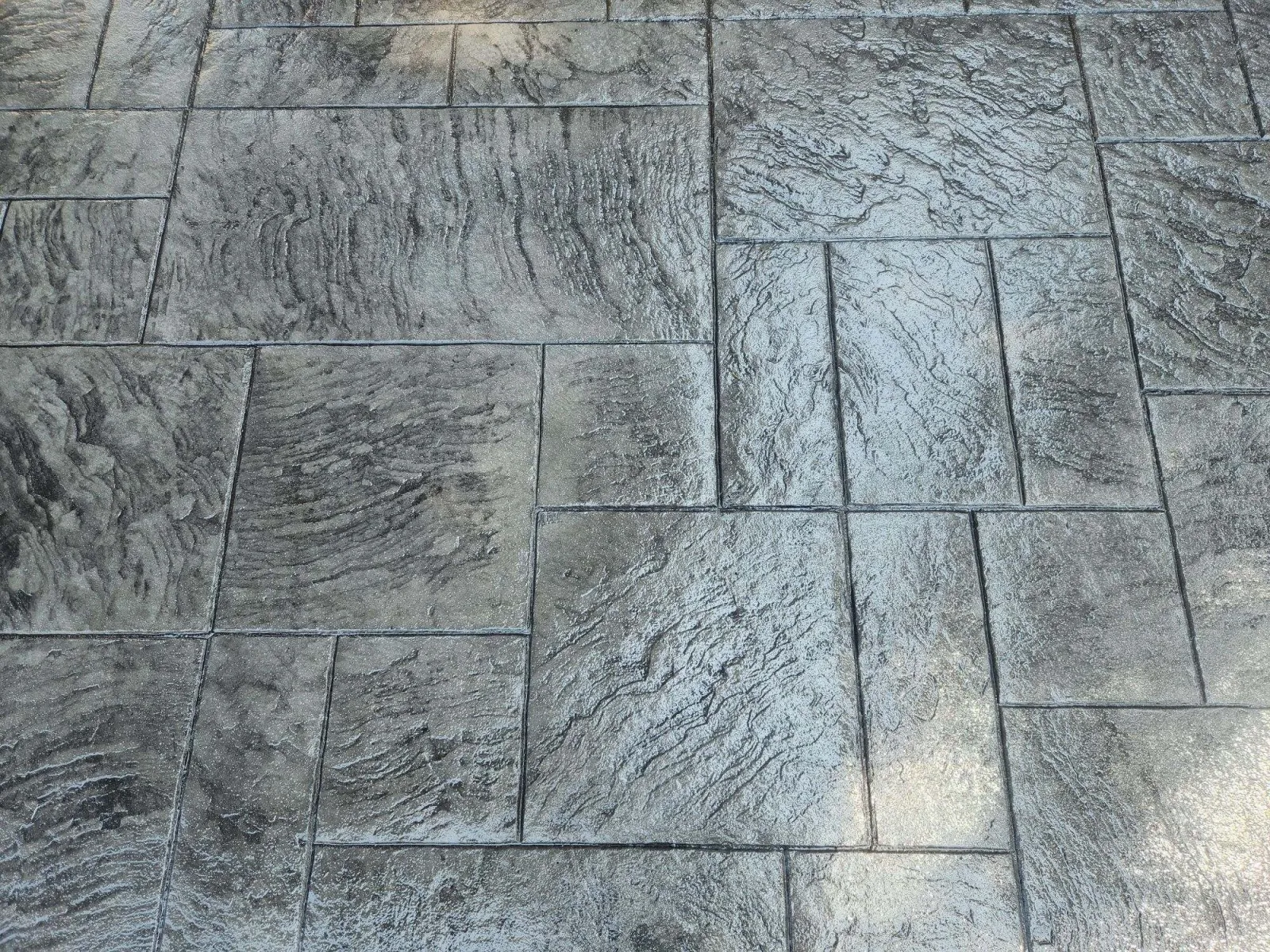
Step 5: Treat Stains and Organic Growth
For stubborn stains or algae:
Use cleaners specifically labeled safe for decorative concrete.
Spot-treat rather than flooding the entire surface.
Rinse thoroughly after application.
If growth returns quickly, drainage or shade conditions may need adjustment.
Step 6: Allow the Surface to Fully Dry
Before resealing or heavy use, allow the concrete to completely dry. Trapped moisture can cause sealer failure or hazing.
How Often Should You Clean Stamped Concrete?
Most stamped concrete benefits from:
Light cleaning: Every few months
Deep cleaning: Once per year (or as needed)
High-traffic areas or shaded zones may require more frequent attention.
When Resealing May Be Necessary
If water no longer beads on the surface, color looks faded, or the concrete stains easily, the sealer may be wearing out. Resealing protects color, enhances durability, and improves longevity.
Common Mistakes to Avoid
❌ Using high-pressure washing aggressively
❌ Applying acidic or harsh chemical cleaners
❌ Scrubbing with metal brushes
❌ Sealing over damp concrete
❌ Ignoring drainage or recurring algae issues
Proper Cleaning Protects Your Investment
Regular cleaning keeps stamped concrete looking sharp, improves safety, and extends the life of the surface.
If your stamped concrete needs professional cleaning, resealing, or surface restoration, Sudlow Concrete provides expert concrete services throughout the Atlanta area.