How to Choose a Commercial Concrete Contractor
in Atlanta
Commercial Concrete Contractor
Guide to Choosing the Best

Look for commercial and industrial project experience specifically, proper licensing and insurance, references from similar-scale jobs, a clear written scope, and familiarity with Atlanta's clay soil. On commercial work, experience matters more than the lowest bid.
A five-star residential driveway contractor can still be the wrong choice for a warehouse floor. The scale, the technical requirements, and the cost of getting it wrong are all different. Here's the checklist we'd want a business owner to run through before signing anything.

The Screening Checklist We'd Use Ourselves
Before comparing prices, run every bidder through the same short list: Do they have documented commercial or industrial project experience, not just residential work described as "commercial-grade"? Can they produce proof of liability insurance and workers' comp on request, not just tell you they have it? Will they give you references from projects similar in size and scope to yours, not just their best residential reviews? Do they offer a written scope and timeline before you sign, or just a verbal estimate?
Why Commercial Experience Isn't Optional
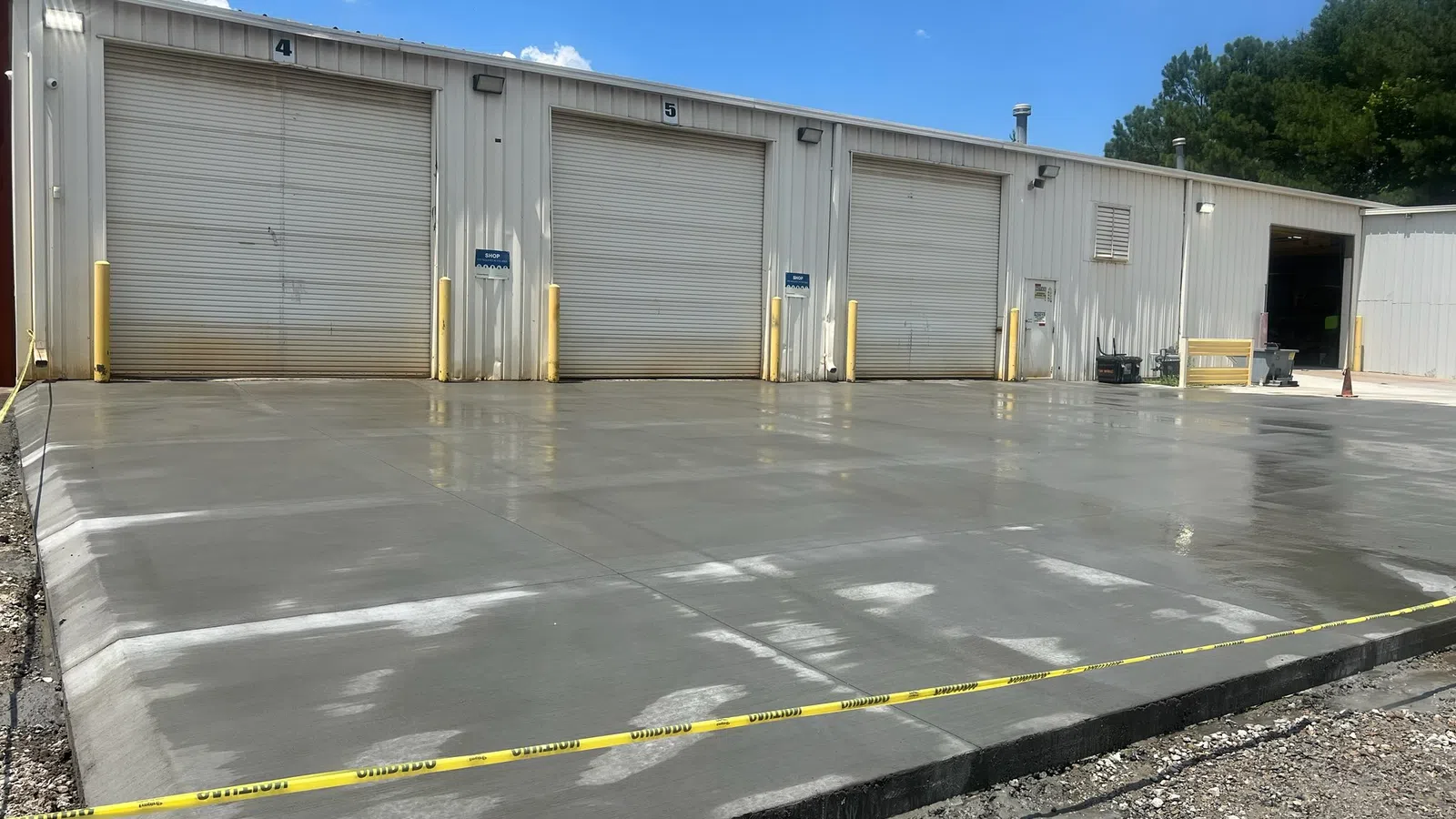
A residential driveway and a warehouse floor share a material, concrete, and almost nothing else in terms of what the job actually demands. Load ratings, pour volume, specialized coatings, and ADA compliance considerations are all part of commercial work in a way they typically aren't on a home project. Ask specifically about past commercial and industrial jobs. Our commercial and industrial concrete services page outlines what that scope actually looks like.
What We'd Tell You to Ask About Surface Prep
If your project involves a coating, epoxy, polyaspartic, or anything similar, ask the contractor to walk you through their surface prep process before you talk about the coating itself. This is the step that gets rushed most often, and it's also the step that determines whether a coating lasts five years or fails within one. We cover exactly why in why improper surface prep causes concrete coating failure. A contractor who can't explain their prep process in specific detail is a red flag, regardless of how good their finished-photo portfolio looks.
Red Flags Worth Walking Away From
A quote given without a site visit. Insurance documentation that's slow to arrive or never quite shows up. A bid dramatically lower than every other one you've received, with no clear explanation for the gap. Vague answers about phasing on a project that needs to happen around your business's active operations. On commercial work, any one of these alone is worth pausing on; more than one is worth walking away entirely.
Why the Lowest Bid Isn't Always the Best Value
We've been called in more than once to fix commercial concrete work that came in under everyone else's bid and failed within a year or two, at which point the business paid for the job twice. A lower price with no clear explanation, thinner materials, skipped reinforcement, rushed curing time, usually shows up later as a repair bill, not a savings.
Our Approach to Commercial Bids
We walk every commercial site in person before quoting, because a warehouse floor and a parking lot have completely different failure points, and we won't guess at either from a phone call. If a project needs to be phased to keep part of your business operating, we'll say so upfront rather than discover it mid-project.