Stamped Concrete vs Pavers:
Cost & Longevity Comparison in Atlanta
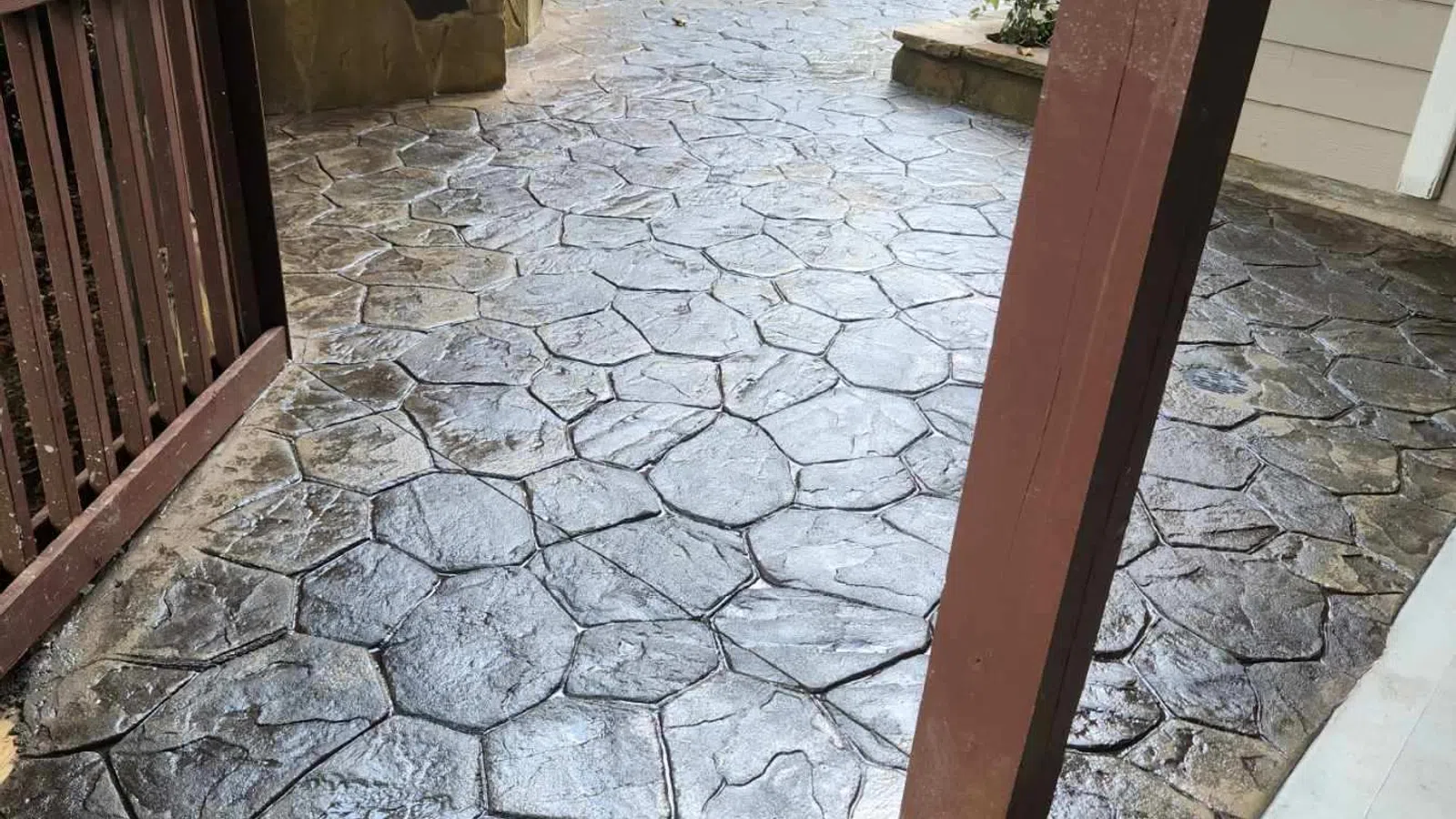
Stamped concrete is a favorite for Atlanta homeowners because it provides the high-end look of slate, fieldstone, or wood planks without the high-end price tag. However, the most common question we get after an installation is: "How long is it going to stay this color?"
In Atlanta's climate—where we have intense UV rays, high humidity, and heavy pollen seasons—the color of your concrete is under constant attack. Here is what determines how long that vibrancy lasts and how you can protect it.
The Science of Color Longevity
The "lifespan" of the color depends entirely on how the color was applied during the pour.
- Integral Color (The "Full Thickness" Method): This pigment is mixed directly into the concrete truck. The color goes all the way through the slab. Even if the surface chips, the color underneath is the same. Lifespan: Permanent, though it can "fade" or dull without a sealer.
- Color Hardener (The "Surface" Method): This is a powder shaken onto the wet surface. it creates a very dense, vibrant top layer. It is highly resistant to wear but can eventually "walk off" over decades in high-traffic areas. Lifespan: 15-25 years if maintained.
- Release Powder (The "Accent" Method): This is the secondary color that creates the "grout lines" and antique shadows. Since it sits right on the surface, it is the first to go if the sealer fails.
Why Color Seems to "Disappear" (The Sealer Factor)
When homeowners tell us their concrete has "faded," it usually hasn't actually lost its pigment. Instead, the sealer has worn off. When sealer breaks down, the surface of the concrete becomes "micro-rough." Light no longer reflects off it evenly, making the color look dull, grey, or chalky. We call this oxidizing. In 90% of cases, simply cleaning and resealing the concrete will "reactivate" the color and make it look brand new again.
The "Atlanta Factors" That Shorten Color Life
- UV Exposure: Georgia's sun is the #1 culprit. South-facing driveways will always dull faster than shaded back patios.
- The "Yellow Pollen" Sludge: In the spring, if pollen and organic debris are left to rot on the surface, they can create acidic tannins that stain or eat through the sealer.
- In-Ground Chlorine: For pool decks, constant splashing of chlorinated water can "bleach" topical stains if the concrete isn't protected by a high-quality solvent-based sealer.
Signs Your Color Needs a "Refresh"
- The "Water Test": Pour a cup of water on the slab. If the color instantly darkens and looks vibrant again while wet, your color is fine—you just need a new coat of sealer.
- White Haze: This is a sign the sealer is "blushing" or lifting and needs professional attention.
- Dull Appearance: If the "pop" is gone, it's time for maintenance.
How to Make Stamped Concrete Color Last 20+ Years
- Reseal Every 2-3 Years: This is the golden rule. In Atlanta, the sealer is the only thing standing between your color and the sun.
- Use a "UV-Resistant" Sealer: Not all sealers are created equal. We use professional-grade sealers specifically designed to block UV rays.
- Avoid Harsh Chemicals: Never use "de-icing" salts in the winter, and avoid using high-pressure power washing which can strip the color right off the surface.
Can Faded Concrete Be Saved?
If your stamped concrete has already faded significantly, don't worry. As we've covered in our guide to recoloring stamped concrete, we can apply antiquing washes and tinted sealers to restore that "day-one" look without replacing the slab.