Concrete Steps vs Wood Steps
Pros and Cons
Concrete Steps vs. Wood Steps
Guide to Each Option

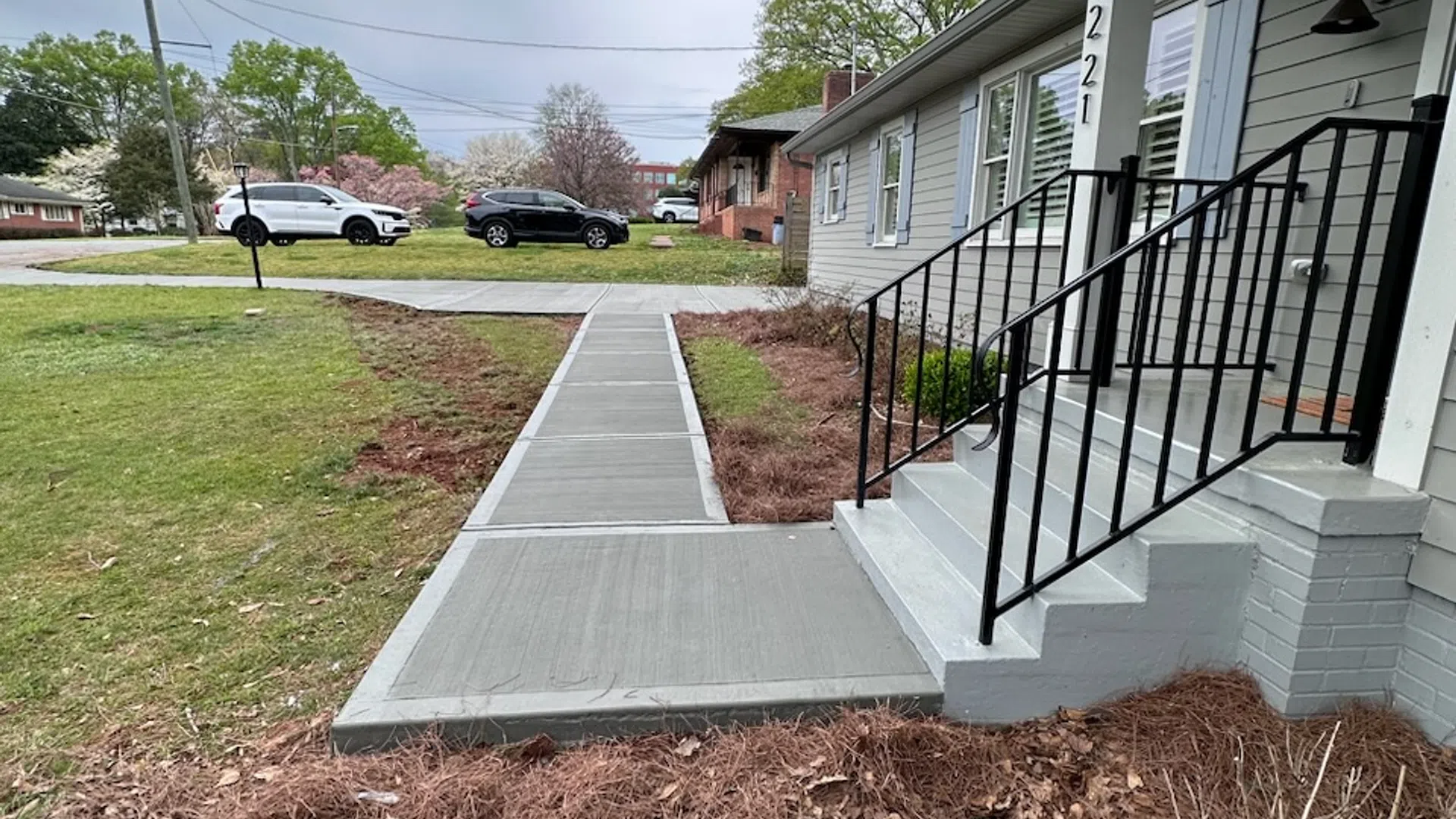
Concrete steps cost more upfront but last 30+ years with minimal maintenance. Wood steps are cheaper and faster to install but typically need major repair within 10 to 15 years, especially in Atlanta's humidity.
We get called out to replace wood steps far more often than concrete ones, and it's almost never because the homeowner disliked the look. It's because the wood finally rotted, warped, or became unsafe to use. Here's the honest tradeoff between the two.

The Mistake We See Most Often
Homeowners often choose wood for a shaded, north-facing entry, exactly the spot that stays damp longest after rain, without realizing that's the worst possible location for a material that's vulnerable to moisture. We've replaced more than a few sets of wood steps in these exact conditions that lasted barely half their expected lifespan because the location worked against the material from day one.
Upfront Cost
Wood is typically cheaper to build initially and installs faster than a concrete pour, which needs forming and cure time. If you need a quick, budget-conscious fix and understand the tradeoff, wood has a real advantage here.
Durability and Lifespan
This is where concrete pulls well ahead. A properly built concrete step can last 30 years or more with minimal attention. Even pressure-treated wood typically needs major repair or replacement within 10 to 15 years due to rot, warping, and insect damage, a timeline that shrinks further in shaded or poorly ventilated spots. Atlanta's humidity is harder on wood than it is on concrete, a dynamic we cover from the concrete side in how heat and humidity affect concrete.
Decision Framework
- Shaded, north-facing, or generally damp entry: concrete, strongly. This is where wood fails fastest.
- Sunny, well-ventilated entry, tight near-term budget: wood is a more reasonable option here, with the understanding it'll need attention sooner.
- Planning to stay in the home long-term: concrete's lower lifetime maintenance usually wins out.
- Selling within a few years: either can work, though concrete requires less explaining to a buyer's inspector.
Maintenance, Realistically
Wood needs periodic staining or sealing, regular inspection for rot and insects, and board replacement as it wears. Concrete needs occasional sealing and prompt attention to chips, covered in how to repair cracked or chipped concrete steps, but nothing close to wood's ongoing upkeep.
Safety in Wet Weather
Concrete steps can be finished with a broom texture or non-slip additive for reliable grip. Wood steps get slippery when wet, and worse, develop a fine layer of algae in shaded spots that's genuinely hard to see until you're already sliding on it.
Our Honest Take
If your entry is anything but full sun and good airflow, we'll steer you toward concrete almost every time, not because it's the bigger job for us, but because we've replaced too many rotted wood steps in shaded entries to recommend repeating that mistake.