Concrete Slab vs Crawl Space vs Basement
for Atlanta Homes
Quick Answer: A slab is the most cost-effective, lowest-maintenance option for flat lots. Crawl spaces work well on sloped or wet lots and allow easier utility access. Basements offer the most usable space but demand the most attention to waterproofing given Georgia's clay and rainfall.
This decision usually gets made once, at the start of a build, and lived with for the next fifty years. It's worth getting right the first time. Here's how we walk homeowners and builders through it.
The Question We Ask First: What's the Lot Actually Doing?
Before cost or preference, the lot itself usually makes the decision for you, or at least narrows it significantly. A flat lot with decent natural drainage opens up all three options. A steep or sloped lot often makes a basement the practical, even obvious, choice, since you're excavating into the grade anyway. A lot with a history of standing water after rain pushes us toward a crawl space or basement with serious waterproofing, rather than a slab that could sit in saturated soil.
Concrete Slab Foundations
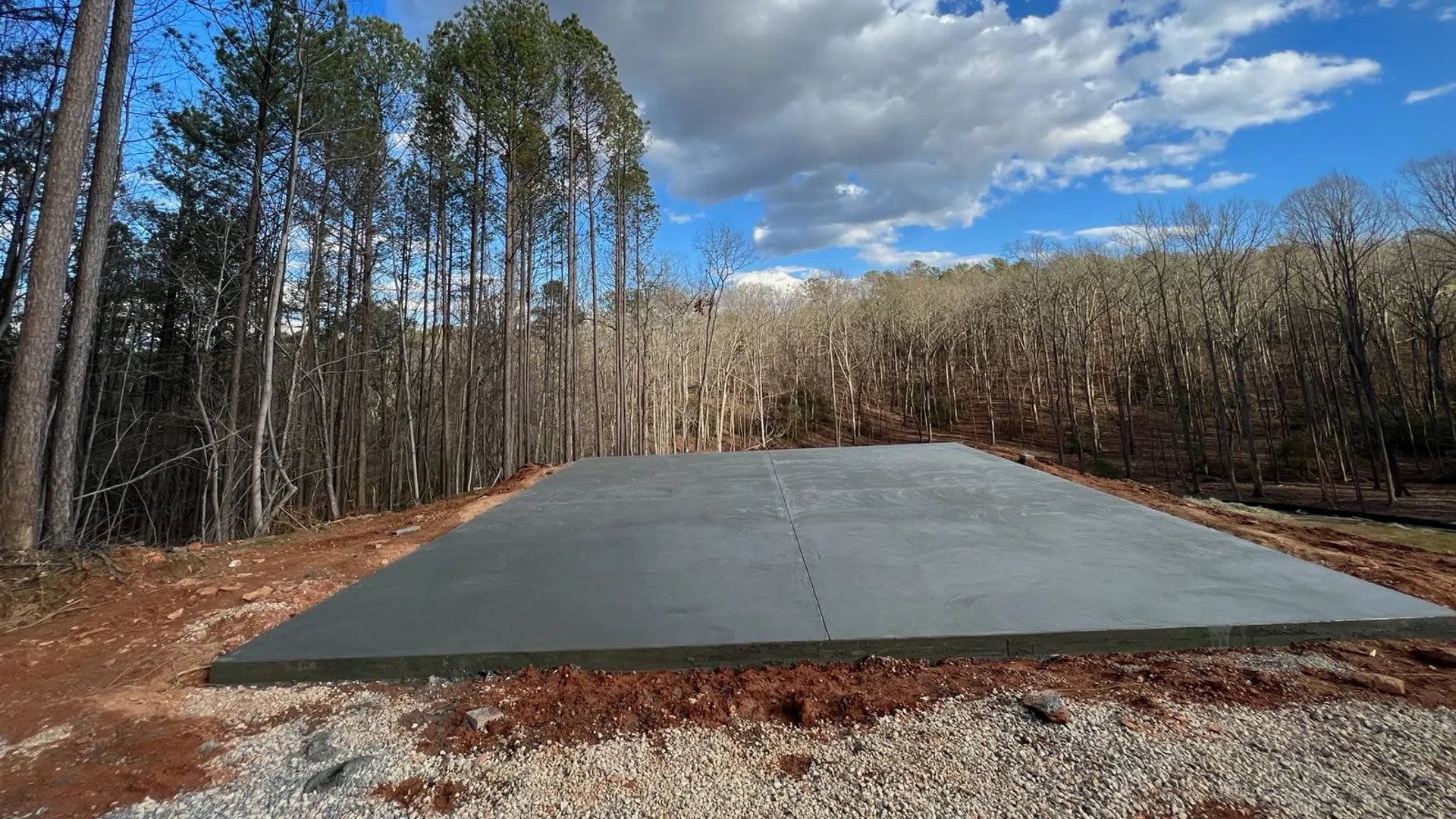
A single, thick layer of concrete poured directly on grade, with the home built on top. It's the most affordable option, has the fewest moisture concerns since there's no enclosed space underneath to trap humidity, and needs the least long-term attention. The tradeoff: no extra storage or mechanical access, and a plumbing repair means cutting into the slab itself, which is a bigger job than it sounds.
Crawl Space Foundations
Raises the home a few feet above grade on short foundation walls, leaving an accessible space for plumbing, wiring, and HVAC underneath. This is the one we see cause the most regret when it's done poorly, an unsealed, unvented crawl space in Atlanta's humidity is a near-guaranteed path to musty smells and, eventually, mold or wood rot. Done right, with a proper vapor barrier and often full encapsulation, it's a genuinely good middle ground between a slab's affordability and a basement's accessibility.
Basement Foundations
Digs down to create a full lower level, offering the most usable square footage of the three by a wide margin. It's also the most expensive to build and the least forgiving if waterproofing is treated as optional rather than essential, since a basement wall faces sustained soil pressure and moisture exposure that a slab or crawl space simply doesn't. We cover the specific methods in how to waterproof a concrete foundation.
Decision Framework by Lot Type
Flat lot, good drainage, budget-conscious: slab.
Flat to gently sloped lot, want future utility access: crawl space, properly encapsulated.
Sloped or hillside lot: basement, since you're excavating regardless.
Want maximum usable square footage and are budgeting for it: basement, with waterproofing treated as core scope, not an add-on.
Common Mistakes We See
Choosing a crawl space for cost reasons and then skipping encapsulation to save further, only to deal with moisture issues within a few years. Or choosing a basement and treating waterproofing as a line item to trim during budget negotiations, which almost always costs more to fix after the fact than it would have to build correctly the first time.
Cost, Realistically
Slabs are cheapest to build, crawl spaces sit in the middle, and basements cost the most upfront due to excavation and waterproofing, though a finished or finishable basement adds real square footage that can offset that gap over time.