Concrete Driveway Resurfacing vs Replacement
Which Do You Need?
Commercial Concrete Contractor
Guide to Choosing the Best

Resurfacing works when your driveway's structure is sound but the surface is worn or cosmetically cracked. Replacement is necessary when there's structural cracking, sinking, or a base that's failed. A quick inspection of your slab's cracks and evenness usually makes the answer clear.
This is probably the single most common question we field on a driveway inspection, and it's also the one where homeowners most often assume the answer before we've even looked, usually assuming "replace" when "resurface" would have done the job, or the reverse. Here's how we actually make the call.

Common Mistakes We See People Make on This Decision
The biggest one is judging a driveway purely by how it looks from a standing position. Staining, fading, and surface roughness look dramatic but are almost always cosmetic, fixable with resurfacing. Meanwhile, a driveway that looks "fine" from a few feet away can be hiding a hairline crack with a real offset that only shows up when you run your hand across it. We've walked driveways homeowners were ready to fully replace over surface staining alone, and driveways homeowners wanted to simply resurface that actually had base failure underneath. Looks and structural condition are two different questions.
What Resurfacing Actually Involves
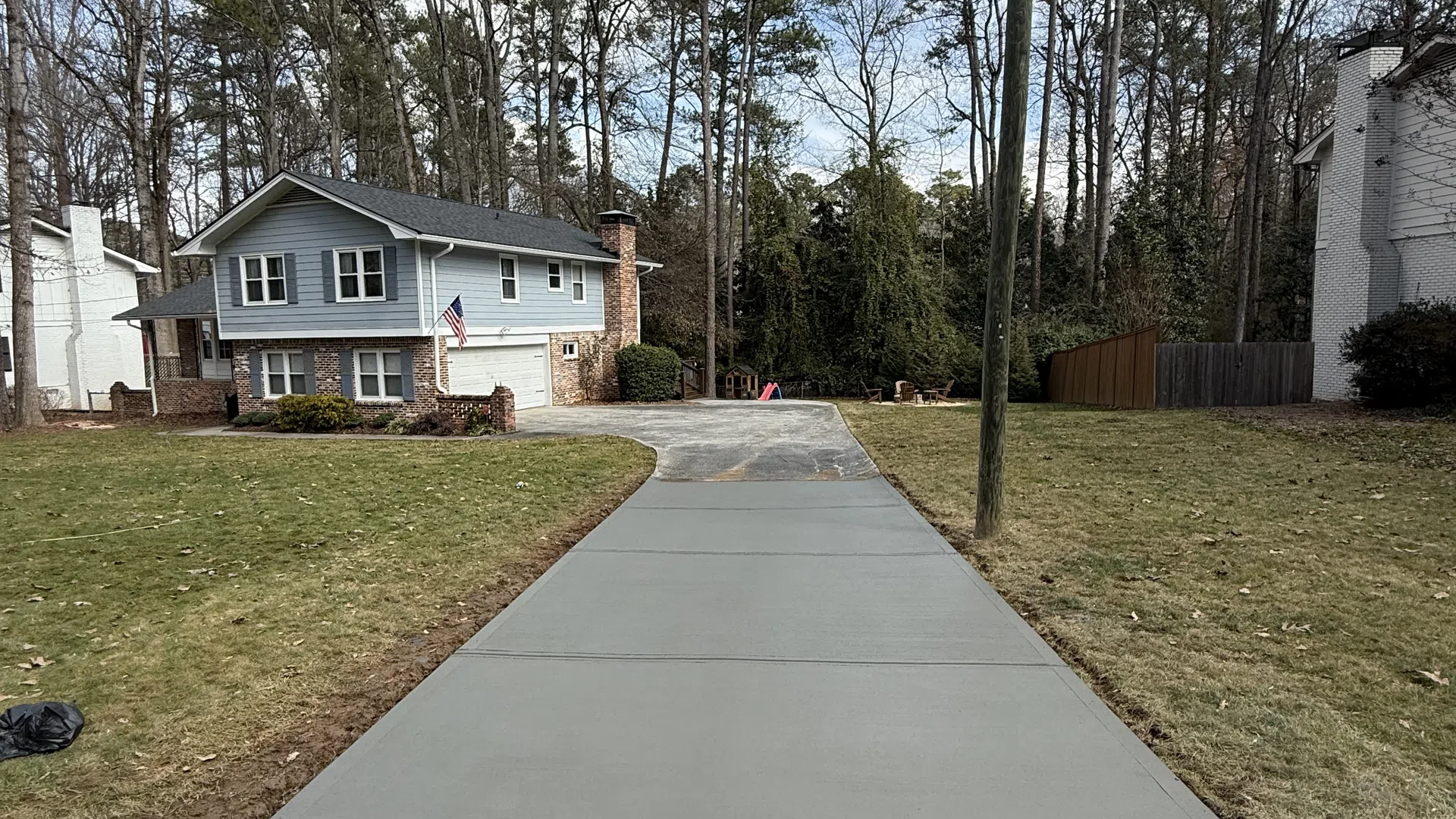
Resurfacing applies a new 1 to 2 inch layer of concrete directly over the existing driveway, restoring a clean surface and covering cosmetic damage without the cost and disruption of demolition. It's also a natural opportunity to add a stamped or stained finish at the same time, since you're already putting down a fresh surface layer.
What Replacement Actually Involves
Replacement means removing the driveway down to the base and pouring new. It costs more and takes longer, but it's the only way to actually fix a problem that started below the surface, whether that's a base that was never compacted correctly or drainage that's been quietly saturating the soil for years.
Our Decision Framework
- Resurface if: the slab is level with no offset cracks, cracking is limited to a few hairlines under 1/8 inch, and the problems are cosmetic, fading, staining, minor surface roughness.
- Repair a section if: the damage is isolated to one clearly defined area and the rest of the slab is structurally sound.
- Replace if: you're seeing offset cracks, cracking driven by drainage that hasn't been corrected (see concrete driveway drainage), or a slab that was never properly reinforced to begin with, described in what causes driveway cracking in Atlanta.
Why We'll Sometimes Talk You Out of Resurfacing
Resurfacing over a base that's already failing is a short-term fix that looks great for a season or two and then cracks in the exact same spots. We'd rather tell a homeowner that upfront than take the easier, cheaper job and have them calling us again in two years with the same complaint. If we recommend replacement, it's because resurfacing genuinely wouldn't hold, not because it's the bigger job.
Cost and Lifespan Side by Side
Resurfacing costs less upfront and can add 10-15 years of life to a driveway with a sound base. Replacement costs more but resets the clock to a full 30-40 year lifespan, covered in how long does a concrete driveway last. See full pricing context in concrete driveway costs.