Can You Power Wash Sealed Concrete?
The short answer is: Yes—but you have to change your technique.
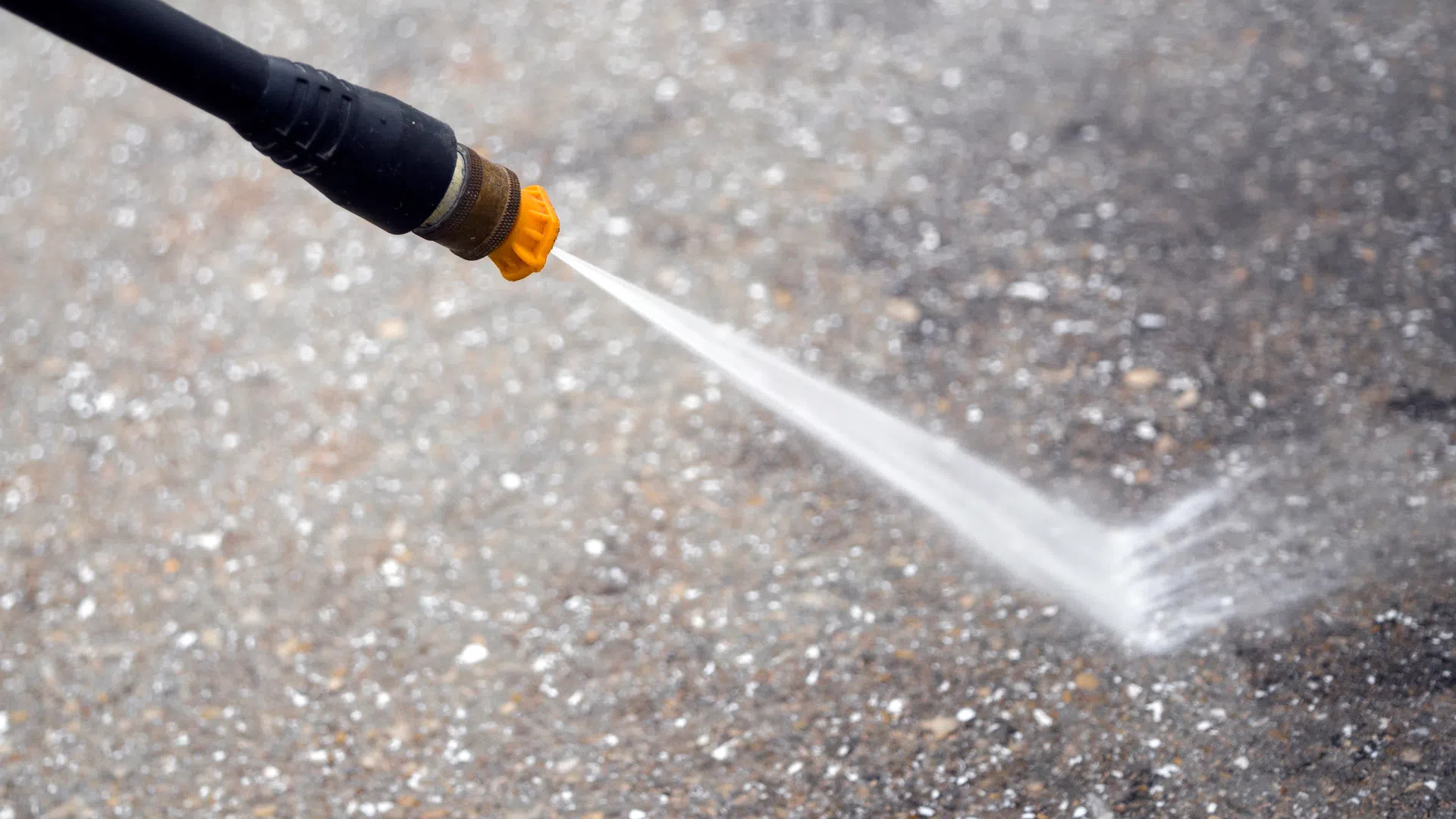
Many Atlanta homeowners assume that once their concrete is sealed, it's bulletproof. While a sealer provides a great barrier against Georgia's red clay and oil spills, it still needs a regular cleaning. However, if you go out there with a high-powered rental pressure washer and a narrow nozzle, you can actually "blast" the protective skin right off your concrete.
The Danger of High PSI
Sealer is a protective layer, not a permanent part of the rock. When you hit it with excessive PSI (pounds per square inch), you risk:
- Stripping the Sealer: High pressure can peel the sealer off in uneven patches, leaving your driveway looking "splotchy."
- "Tiger Stripes": These permanent streak marks occur when the pressure etches a path through the sealer.
- Opening the Pores: Once the sealer is compromised, Atlanta's humidity and rain get trapped inside the concrete, leading to cracks or deep organic stains.
Know Your Sealer: Topical vs. Penetrating
How you wash depends on what kind of sealer Sudlow (or another pro) applied:
- Topical Sealers (Glossy/Wet Look): These sit on top of the concrete. They are the most vulnerable to power washing. Use very low pressure (under 1,500 PSI) and rely more on soap than force.
- Penetrating Sealers (Natural Look): These live inside the pores. They are much hardier, but you still shouldn't get too aggressive, as you can wear down the hydrophobic properties over time.
Safe Washing Guidelines for Atlanta Homes
- Lower the PSI: Keep your machine between 1,500 and 2,000 PSI. Standard commercial washers go up to 4,000 PSI—stay far away from that setting.
- The "Fan" Tip Only: Use the 40-degree (white) or 25-degree (green) nozzle. Never use the 0-degree (red) tip; it acts like a laser and will cut through sealer instantly.
- The "Sweep" Method: Keep the wand moving at all times. If you stop to focus on one stubborn spot, you'll likely leave a permanent mark in the finish.
The "Water Bead Test": Is Your Protection Still There?
After you finish cleaning and the concrete is dry, perform this simple test: Pour a cup of water on the slab.
- If it beads up like water on a freshly waxed car, your sealer is healthy.
- If it soaks in and turns the concrete a dark "wet" color, your sealer has worn thin.